
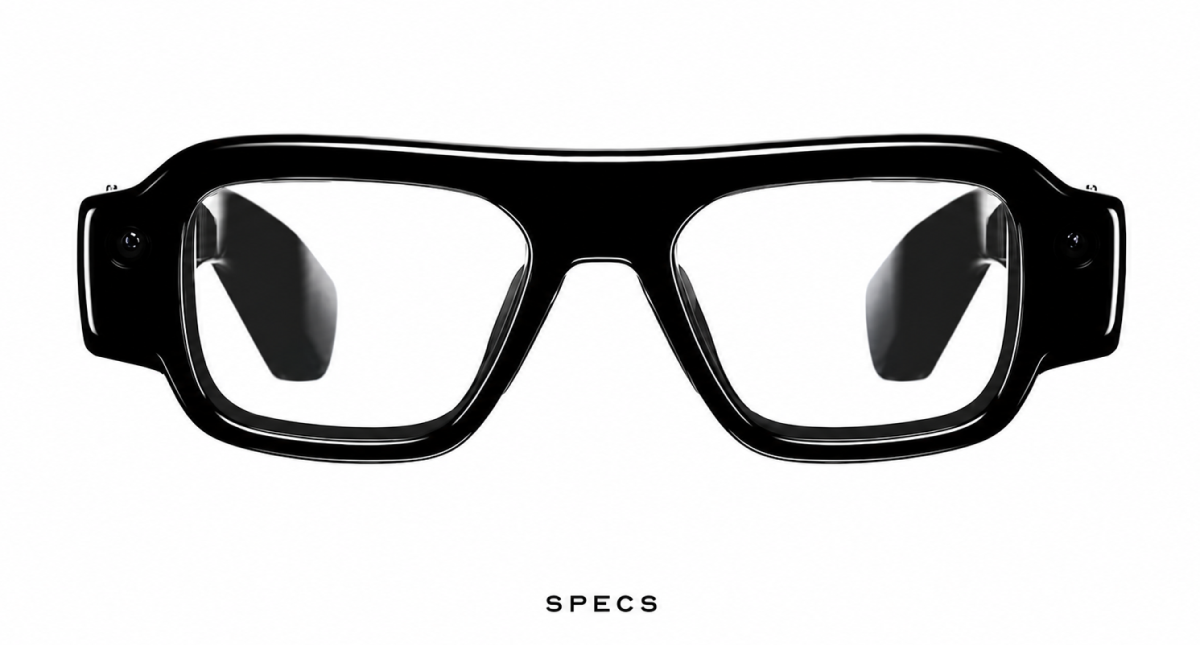
Snap, the company behind Snapchat, has officially unveiled SPECS, a new pair of standalone augmented reality glasses designed to bring AI, entertainment, productivity tools, and digital experiences directly into the world around you.
Announced at Augmented World Expo 2026, SPECS represents Snap’s latest effort to turn augmented reality into a mainstream computing platform. Unlike many AR devices that rely on a smartphone, external battery pack, or wired connection, SPECS operates entirely on its own.
Snap says the goal is simple: create technology that helps people stay engaged with the real world instead of constantly staring down at a screen. The company believes augmented reality is the next evolution of computing because it allows digital content to exist alongside the physical world rather than inside a phone or laptop.
The hardware itself is ambitious. SPECS is available in two sizes, a 47mm Narrow Fit model and a 52mm Wide Fit version. The glasses use Swiss TR90 frames and weigh just 132 grams and 136 grams respectively, making them noticeably lighter than many mixed reality headsets currently on the market. Prescription lens support is also available through a third-party partner.
One of the standout features is the transparent waveguide display system. Snap says it delivers 16 million colors across a 51-degree field of view while allowing users to remain focused on the world around them. The company compares the experience to working on a 24-inch desktop monitor or watching content on a 115-inch screen positioned roughly 10 feet away.
The glasses also feature electrochromic lenses that can transition from clear to tinted in about 10 seconds, helping users move between indoor and outdoor environments without changing eyewear.
Powering SPECS are dual Snapdragon processors. One chip focuses on computer vision tasks while the other handles applications and experiences known as Lenses. According to Snap, this architecture enables fast hand tracking, low-latency interactions, and a motion-to-photon latency of just 7 milliseconds.
Users can interact with the glasses using voice commands and hand gestures, eliminating the need for a separate controller. Snap says the combination of world understanding, gesture recognition, and AI assistance creates a more natural way to interact with computing.
Artificial intelligence is central to the experience. Because the glasses can understand what the wearer is looking at, AI can provide contextual information and assistance in real time. Instead of pulling out a phone and typing a question, users can potentially receive help based on their surroundings and current activity.
Snap also envisions SPECS as a productivity tool. Users can cast screens, collaborate on virtual whiteboards, stream media, and interact with digital workspaces while remaining aware of the people and environment around them. Developers have already built hundreds of experiences for the platform, ranging from educational applications to interactive games.
Battery life is rated for up to four hours of mixed use, which includes audio and video playback, AI features, notifications, and Lens experiences. The included charging case provides four additional charges, extending total usage to roughly 20 hours throughout the day.
Privacy remains a concern whenever camera-equipped wearables are involved, and Snap says it designed SPECS with transparency in mind. The glasses include an LED recording indicator, prioritize on-device processing where possible, and provide controls for managing stored and shared data.
As someone who has followed the augmented reality industry for years, I have to admit that SPECS looks genuinely cool. Unlike many previous AR products that felt more like prototypes than consumer devices, these glasses appear to have been designed with everyday wearability in mind. The lightweight build, prescription lens support, adaptive tinting, and controller-free voice and gesture controls all sound promising.
The problem, however, is the price.
At $2,195, SPECS costs more than many premium laptops, smartphones, and gaming PCs. While early adopters and technology enthusiasts may be willing to pay that premium, convincing everyday consumers to spend more than two thousand dollars on AR glasses could prove to be Snap’s biggest challenge.
SPECS is available for pre-order here now with a refundable $200 deposit. Snap expects shipments to begin this fall in the United States, the United Kingdom, and France.
Support independent tech journalism
NERDS.xyz is independently owned and operated. If you enjoy my coverage of Linux, AI, hardware, cybersecurity, and tech culture, consider supporting the site on Ko-fi.
Support NERDS.xyz