
Booking a summer vacation used to mean worrying about flight delays, bad weather, or overpriced airport food. Now folks also have to worry about getting ripped off before the trip even starts.
New research from McAfee says travel scams are becoming a growing problem as people rush to lock in deals while prices continue climbing. According to the company, 38 percent of travelers say they have encountered some type of travel-related scam, and 41 percent of those victims ended up losing money.
Some losses were pretty brutal too. McAfee says nearly half of the people who got scammed lost more than $500.
The company believes urgency is a huge reason these scams work. Its survey found that 90 percent of travelers feel pressure to book quickly, while 33 percent admitted they ignored warning signs because they did not want to miss out on a deal. That sounds about right. When airfare and hotel prices keep bouncing around by the hour, people panic book.
Scammers know that.
McAfee Labs says criminals are increasingly impersonating trusted travel brands to trick people into clicking fake links, entering payment information, or booking through scam sites. Tripadvisor was reportedly the most impersonated travel app in the company’s research, appearing at roughly three times the rate of other big names like Kayak, Expedia, and Booking.com.
That is what makes these scams more dangerous now. They are not always obvious anymore. A fake airline message or hotel confirmation can look pretty convincing, especially when AI tools make it easier to generate realistic emails, websites, and text messages at scale.
“The cost of travel is getting more expensive each year, and that’s changing how people make decisions,” said Abhishek Karnik, Head of Threat Research at McAfee. “When prices are high and availability feels tight, people will likely move faster. Scammers take advantage of that by impersonating the travel brands and messages consumers already trust. AI is making these scams faster to create, more convincing, and easier to scale.”
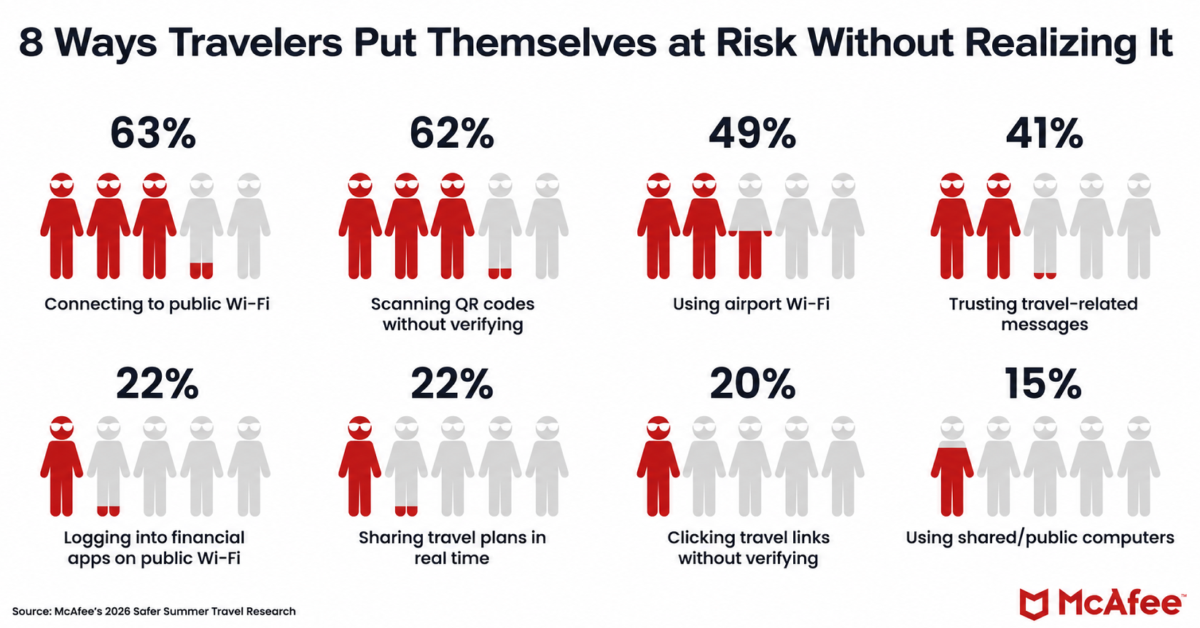
The survey also highlights some habits that probably are not helping matters. McAfee says many travelers continue using public Wi-Fi, airport Wi-Fi, QR codes, and even financial apps while connected to unsecured networks. Meanwhile, 41 percent trust messages that appear to come from airlines or hotels without verifying them first.
That combination of convenience, distraction, and urgency creates a perfect environment for scams.
Some of the most common traps include fake travel deals, bogus booking confirmations, misleading rental listings, fake hotel or airline websites, and customer service impersonation scams. In other words, the entire travel process has become a target.
There is no magic fix here, but common sense still goes a long way. Booking directly through official websites helps. So does avoiding weird payment requests outside normal platforms. Travelers should also double check URLs, be cautious with QR codes, and think twice before trusting random texts or emails claiming there is a problem with a reservation.
Sadly, planning a vacation in 2026 increasingly feels like doing cybersecurity homework first.
Support independent tech journalism
NERDS.xyz is independently owned and operated. If you enjoy my coverage of Linux, AI, hardware, cybersecurity, and tech culture, consider supporting the site on Ko-fi.
Support NERDS.xyz