

LG has announced UltraGear evo, a new high-end gaming monitor lineup that it plans to showcase at CES 2026. The company is clearly aiming higher than standard 4K this time, positioning UltraGear evo as a push into 5K and beyond while trying to soften the hardware demands that usually come with that territory. The hook is on-device AI upscaling, which LG says can make ultra-high-resolution gaming more approachable without forcing gamers into constant GPU upgrades.
The headline feature is what LG calls the world’s first 5K AI upscaling technology. Instead of relying entirely on the graphics card, the monitor itself analyzes incoming content and enhances it in real time before it reaches the panel. LG’s argument is that this allows a wider range of games and media to look sharper on a 5K-class display, even if they were not rendered at native resolution. It is an interesting pitch, especially as GPUs continue to struggle with ever-higher pixel counts.
UltraGear evo launches with three very different flagship monitors, all built around the same idea of high resolution with fewer compromises. The lineup includes a 39-inch 5K2K OLED, a 27-inch 5K MiniLED, and a massive 52-inch 5K2K ultra-wide display. LG appears to be casting a wide net here, targeting competitive desk gamers, productivity-focused users, and those who want an oversized, immersive setup.

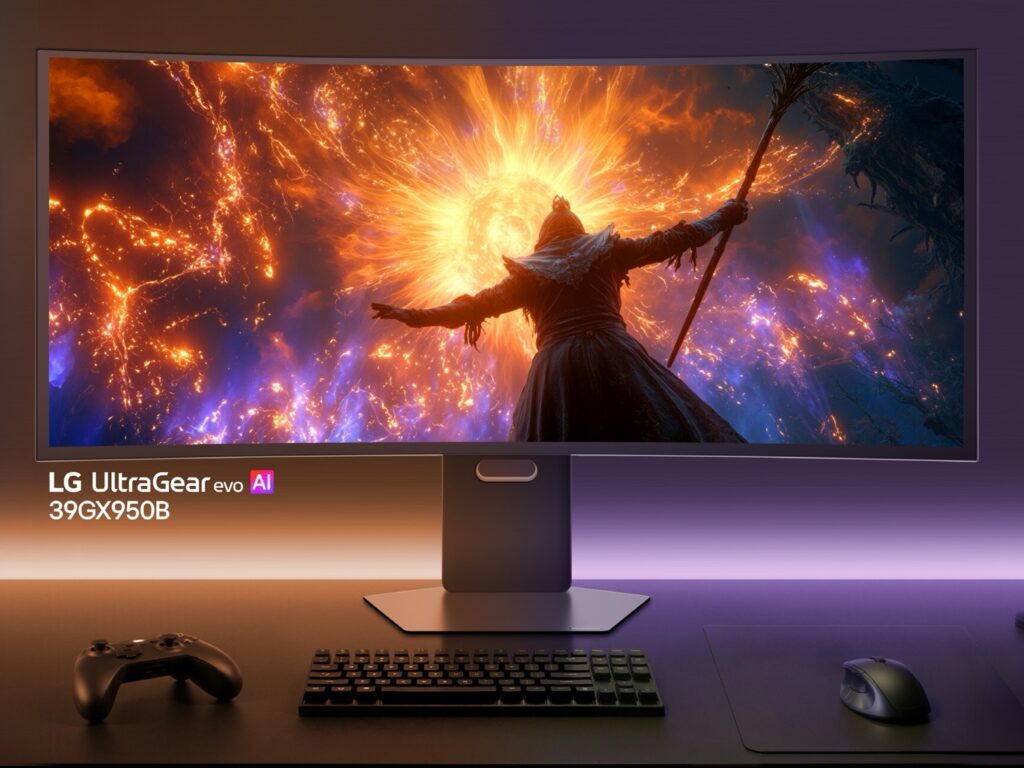
The 39-inch UltraGear evo OLED, model 39GX950B, continues LG’s push into ultra-wide OLED gaming. It combines a 5K2K resolution with a 21:9 aspect ratio and a 1500R curve, giving it the vertical height of a 32-inch screen while expanding outward for multitasking and immersion.
LG says its Primary RGB Tandem OLED panel improves brightness, color accuracy, and panel longevity while still delivering the deep blacks OLED is known for. A Dual Mode feature allows switching between 165Hz at full 5K2K resolution or 330Hz at a lower WFHD resolution, depending on whether visual detail or frame rate matters more.
For gamers who prefer smaller screens with extreme sharpness, LG is positioning the 27-inch 27GM950B as a solution to one of MiniLED’s biggest complaints. Blooming. LG calls it the world’s first 5K New MiniLED gaming monitor designed to better control halo effects.
With 2,304 local-dimming zones and what the company refers to as Zero Optical Distance engineering, the display is meant to keep contrast tight across bright and dark scenes. Like the OLED model, it includes on-device AI features for upscaling, scene optimization, and audio tuning, along with a Dual Mode refresh setup.
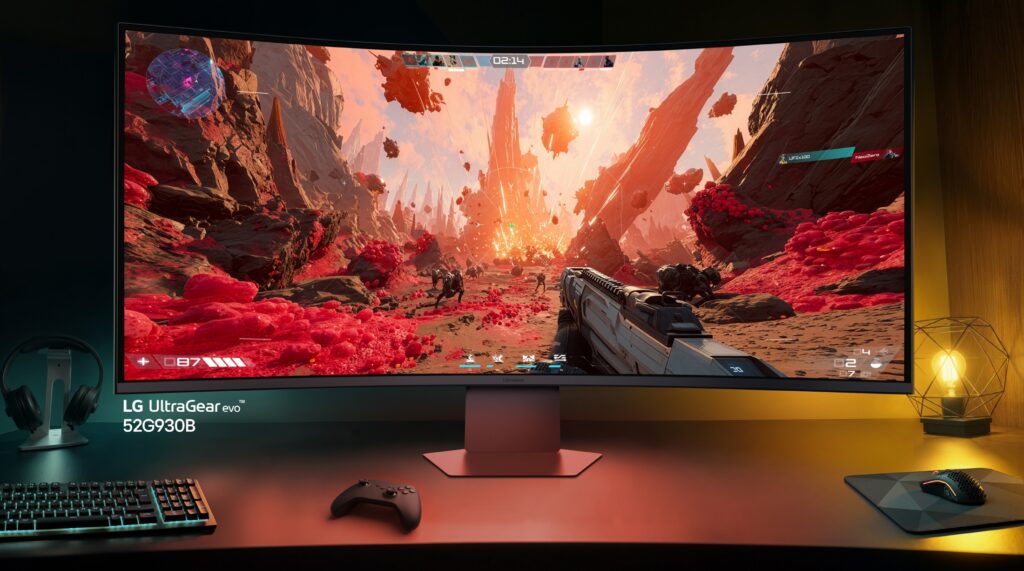
The most eye-catching option is the 52-inch 52G930B, which LG is calling the world’s largest 5K2K gaming monitor. It runs at up to 240Hz and uses a 12:9 panoramic format that the company says is about 33 percent wider than a standard UHD display. A deep 1000R curve is designed to wrap the screen around the user’s field of view, pushing the experience closer to a simulator-style setup than a traditional monitor. This one is clearly about scale and immersion rather than desk-friendly practicality.
LG is framing UltraGear evo as a way to remove long-standing trade-offs between resolution, refresh rate, and screen size. Whether that promise holds up will depend heavily on how well the on-device AI upscaling works in real-world use. Offloading some of the visual processing to the monitor sounds appealing, but gamers are likely to be skeptical until they can see how it compares to native rendering and GPU-based techniques.
The UltraGear evo lineup will be on display at CES 2026 in January, including themed demo areas and a racing simulation setup. LG also confirmed that sales of the UltraGear GX7, a separate 27-inch QHD OLED monitor with an extremely high refresh rate, will begin globally on the opening day of the show.
On paper, UltraGear evo looks like LG testing how far it can push display resolution while using AI to blunt the performance costs. The bigger question is whether gamers will trust monitor-side intelligence enough to treat it as a real substitute for brute-force GPU power.
Support independent tech journalism
NERDS.xyz is independently owned and operated. If you enjoy my coverage of Linux, AI, hardware, cybersecurity, and tech culture, consider supporting the site on Ko-fi.
Support NERDS.xyz