

Linux has long been seen as a safer choice for developers, sysadmins, and security professionals. Operating systems based on the open source kernel are valued for their transparency, control, and stability. That reputation, however, has also created a dangerous blind spot. Many users assume Linux is secure simply because it is not Windows. A newly discovered attack shows that assumption can be quite costly.
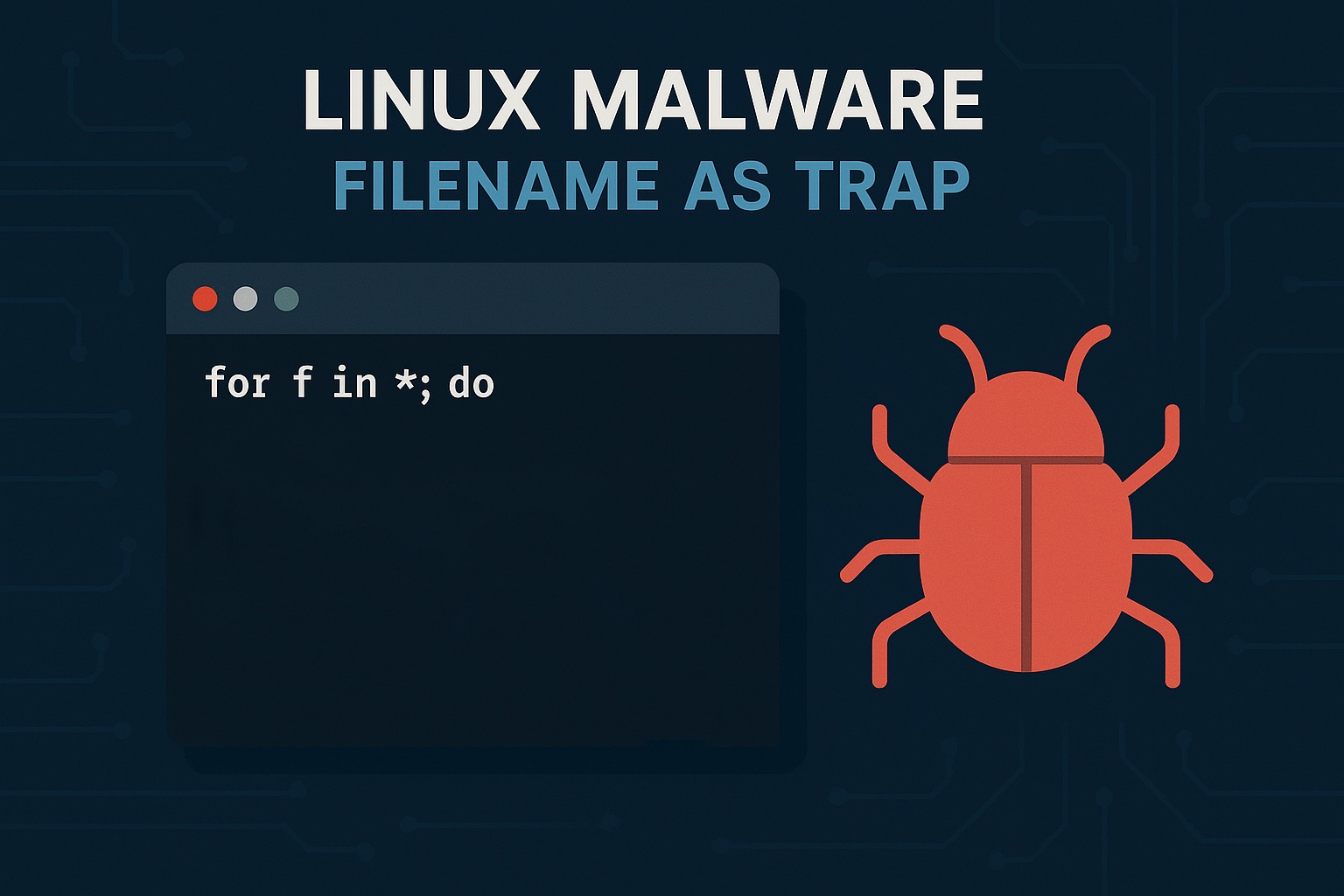
Researchers at the Trellix Advanced Research Center have uncovered a stealthy infection chain that abuses filenames themselves to deliver the VShell backdoor. Instead of hiding malicious code inside a file’s contents, the attacker encodes the payload directly into the filename. When common shell scripts or commands expand the filename, the malicious code silently executes.
That means a seemingly harmless operation such as for f in *; do echo $f; done can trigger the infection without the user ever double-clicking or opening anything. Antivirus tools typically do not scan filenames, and static analysis often misses this type of behavior. By exploiting this gap, the attackers achieve what amounts to a fileless infection.
The initial stage is spread through spam emails containing RAR archives. Inside these archives is a file with a weaponized name crafted to inject Bash commands. When processed, it decodes and runs a downloader script. That script checks the system’s architecture, then retrieves the appropriate ELF binary from a command and control server.
The ELF binary never writes the main payload to disk. Instead, it decrypts the VShell backdoor directly in memory using a simple XOR scheme and runs it through fexecve. To avoid suspicion, the malware renames itself to look like a legitimate Linux kernel worker thread, such as [kworker/0:2]. This makes it far harder to detect in process listings like top or ps.
Once active, VShell grants attackers full remote access to the infected system. It supports reverse shell commands, file uploads and downloads, process management, and even port forwarding. It also works across multiple architectures, including x86, x64, ARM, and ARM64. That means both servers and IoT devices can be targeted.
The attack is linked to techniques used by Chinese threat groups, according to Trellix and other researchers. VShell has previously been observed in campaigns against governments, research organizations, and enterprises. This latest filename-driven delivery method makes it more insidious, since infection can happen simply by running everyday scripts.
The lesson is clear. Linux is not immune to creative malware. Administrators should review scripts for unsafe practices like blindly echoing or evaluating filenames. Security tools must also evolve to account for filename-based attacks. As long as attackers can hide code in unexpected places, the myth of Linux invulnerability will remain just that.
Support independent tech journalism
NERDS.xyz is independently owned and operated. If you enjoy my coverage of Linux, AI, hardware, cybersecurity, and tech culture, consider supporting the site on Ko-fi.
Support NERDS.xyz