
Companies are racing to deploy AI tools across their organizations, but many security teams still have one uncomfortable question hanging over their heads: what exactly are employees doing with these systems?
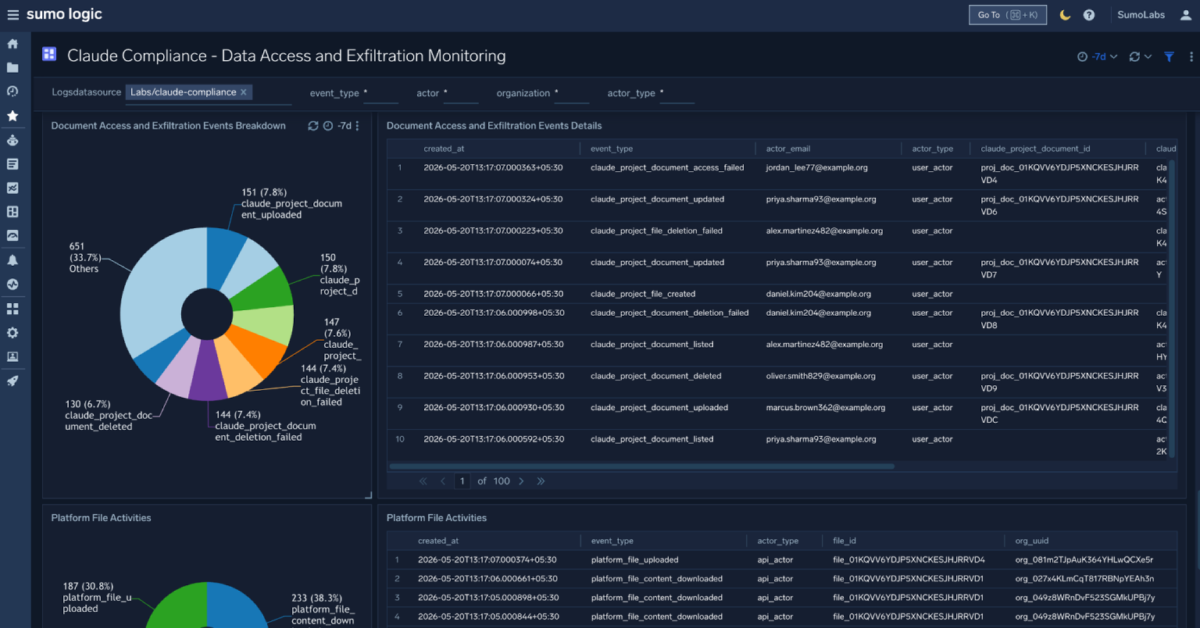
That concern is helping fuel a growing market for AI monitoring and compliance tools, and now Sumo Logic wants a bigger piece of it. The company announced a new integration with Anthropic that brings activity from Claude Enterprise and Claude Platform into Sumo Logic’s monitoring environment.
In plain English, organizations using Claude can now track things like logins, admin actions, API key changes, file operations, and MCP server modifications alongside the rest of their infrastructure logs. The idea is to give security and compliance teams a centralized place to monitor AI-related activity instead of treating AI tools like isolated black boxes.
This feels like another sign that enterprise AI is evolving very quickly from novelty to infrastructure. A year or two ago, companies were still experimenting with chatbots and testing AI copilots in small pilots. Now, businesses are asking the same questions they ask about every other critical system: who accessed it, what changed, what data moved, and how do we audit everything?
The MCP server monitoring aspect is especially interesting. MCP, short for Model Context Protocol, is becoming increasingly important as companies connect AI systems to internal tools, databases, file systems, and services. The more access these AI systems gain, the more nervous security teams become. Monitoring and logging suddenly stop looking optional.
According to Sumo Logic, the integration allows customers to apply existing security operations, data loss prevention, and compliance workflows directly to Claude activity. That means organizations can potentially monitor AI usage with the same tooling they already use for SaaS applications, servers, cloud infrastructure, and developer environments.
Ben Cody, SVP of Product Management at Sumo Logic, said the integration is designed to help enterprises maintain “security, transparency, and accountability” while scaling AI deployments.
What stands out to me is how quickly AI observability is becoming its own category. It is no longer enough for companies to simply deploy AI. Enterprises now want governance layers, audit trails, access controls, compliance reporting, and threat monitoring wrapped around these systems. Frankly, that probably says a lot about how much sensitive information employees are already feeding into AI platforms every day.
There is also a broader industry trend developing here. AI companies increasingly need enterprise credibility if they want large corporate customers. Features like compliance APIs, logging integrations, and centralized monitoring may not sound exciting to regular users, but they are exactly the sort of things that determine whether legal departments and CISOs approve AI deployments internally.
For Anthropic, integrations like this help position Claude as something more than just another chatbot. For Sumo Logic, it creates another opportunity to become part of the rapidly growing AI infrastructure ecosystem surrounding security and compliance.
Whether employees realize it or not, the era of AI workplace surveillance may already be arriving.
Support independent tech journalism
NERDS.xyz is independently owned and operated. If you enjoy my coverage of Linux, AI, hardware, cybersecurity, and tech culture, consider supporting the site on Ko-fi.
Support NERDS.xyz