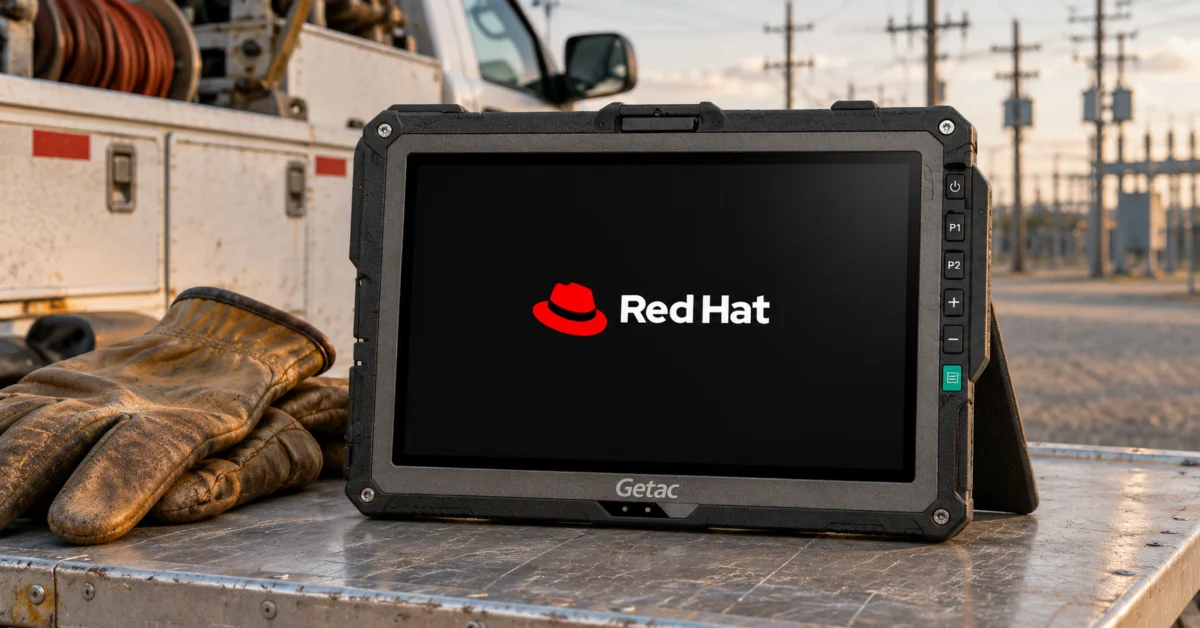
I like seeing Linux show up in places where Windows might otherwise get the job by default. Getac has earned Red Hat Enterprise Linux certification for two fully rugged tablets and a laptop, which means the next computer riding around in a utility truck could be running the same Linux distribution the company already uses in its data center.
The two tablets are the 10.1-inch UX10 and the considerably larger 14-inch G140. If you prefer a physical keyboard, there’s also the 12.2-inch V120 laptop. According to Getac’s announcement, all three are certified for Red Hat Enterprise Linux 10.2 and later releases in the 10.x series.
There is one catch for Linux buyers. You install RHEL yourself after the hardware arrives. Personally, I’d like to see Getac offer it preinstalled, if only so a buyer could open the box, press the power button, and get straight to Linux. For a utility or public safety agency that prepares its own systems before handing them to employees, though, doing the installation in-house may be exactly what it wants.
What I like about certification is that it answers a question Linux users have been asking for decades. Will this thing actually run the operating system I want to use? I might be willing to spend a Saturday finding out on a laptop I bought for myself. I’d feel a little differently if I had to order 200 tablets and send them out with crews responsible for getting the lights back on.
Those crews may have perfectly good reasons to use Windows. If a piece of diagnostic equipment depends on a Windows application, nobody wants to discover that halfway through a repair. But why should that dictate what every other crew carries? An IT department can buy the same Getac tablet for two teams, put Windows on the ones that need it, and deploy its own RHEL configuration on the rest.
For an organization already using Red Hat, there’s a practical upside here. The people preparing a field tablet can draw on the access rules, security profiles, and update procedures they already know. They’ll still want to test the software and accessories their crews rely on, but they can start with hardware that Getac says has been tested for RHEL compatibility.
As a Linux user, that’s the part I’d like to see more hardware makers take seriously. A buyer shopping for a rugged tablet should be able to ask how big the screen is, whether it fits the truck’s dock, and which operating systems the manufacturer supports. On these three Getac devices, Linux is finally an official answer to that last question.
Support independent tech journalism
NERDS.xyz is independently owned and operated. If you enjoy my coverage of Linux, AI, hardware, cybersecurity, and tech culture, consider supporting the site on Ko-fi.
Support NERDS.xyz