Apple has officially unveiled the iPhone 18 Pro and iPhone 18 Pro Max, and there is actually quite a bit going on this year. The new phones get a variable-aperture camera, A20 Pro chip, improved cooling, longer battery life, and a smaller Dynamic Island, but Apple is also betting heavily on something you cannot see from the outside: Siri AI.
Let’s start with the camera, because this is probably the most interesting hardware upgrade. Apple is giving the 48MP Fusion Main camera a variable aperture for the first time on an iPhone, using six physical blades that can adjust how much light reaches the sensor while changing depth of field.
The iPhone can handle aperture adjustments automatically, but users can also manually select from four settings in the Camera app. That should give photographers considerably more control than they have had with previous iPhones, with actual optical adjustments complementing Apple’s usual computational photography tricks.
Apple is leaning further into manual photography with new Pro controls as well. Users can adjust aperture, shutter speed, and white balance directly from the Camera app, while a histogram can help monitor exposure and an API will give third-party developers access to aperture controls.
Video gets some upgrades too, including the ability to apply Cinematic effects after recording to footage captured at up to 60 fps. Time-lapse supports 4K recording with Dolby Vision HDR, while Audio Mix gets improved voice processing and the ability to isolate music.
Perhaps the most unusual camera feature is Apple Reference Image. When the optional Reference mode is enabled, the iPhone captures signed sensor data alongside the photograph, which Private Cloud Compute uses to develop what Apple describes as an unalterable reference image.
Think of it as something resembling a digital negative for the AI era. The reference can be viewed alongside the normal photograph to help determine whether the image was subsequently edited, while Apple also plans to support SynthID later this year for identifying certain images created or modified using artificial intelligence.
For photojournalists in particular, Apple Reference Image could become a very useful feature. Its success will depend on whether publishers, verification services, and third-party developers actually embrace Apple’s system, because an authenticity standard becomes far more useful when it extends beyond one company’s hardware and software.
Powering all of this is the new A20 Pro, which Apple says is manufactured using a 2-nanometer process and provides 50 percent more memory bandwidth than A19 Pro. It has a six-core CPU and seven-core GPU, with Apple claiming graphics performance up to 40 percent faster than the previous generation.
There is also a Dual 16-core Neural Engine with 32 total cores, which Apple says provides twice the AI processing power of A19 Pro. That extra AI horsepower is becoming increasingly important as Apple tries to perform more Apple Intelligence processing directly on the device.
Apple has also changed how it cools the chip. New packaging positions the silicon beside the memory and connects A20 Pro directly to a redesigned vapor chamber with three times the surface area of the one inside the iPhone 17 Pro.
Apple claims the changes enable up to 40 percent better sustained performance than the previous generation. That could matter more than another impressive benchmark number, since a powerful chip is not particularly useful if heat forces it to slow down during gaming, video editing, or other demanding workloads.
Apple’s N1 wireless chip brings Wi-Fi 7, Bluetooth 6, and Thread, while the new C2 cellular modem promises faster uploads than C1X while consuming 15 percent less energy. C2 also supports mmWave in the United States, continuing Apple’s gradual move toward controlling more of the important silicon inside the iPhone.
Battery life gets a substantial bump, particularly if you buy an eSIM-only model. Apple rates the eSIM-only iPhone 18 Pro for up to 36 hours of video playback and the iPhone 18 Pro Max for as much as 45 hours.
Removing the physical SIM hardware gives Apple additional room for the battery, resulting in another two hours of claimed video playback compared with models that retain a SIM slot. Charging is faster too, with Apple saying iPhone 18 Pro can reach 50 percent in around 15 minutes with compatible wired charging hardware.
On iPhone 18 Pro Max, five minutes of wired charging can supposedly provide around seven hours of video playback. As always, those are Apple’s own battery and charging claims, so real-world testing will tell us considerably more.
And then there is Siri AI, which arrives in beta with iOS 27 and represents Apple’s latest attempt to turn Siri into something substantially more useful than the assistant we have today. Siri AI can use personal context from messages, email, photos, and other information to answer questions and perform tasks.
It can also understand information displayed on the screen, take actions based on that information, and answer more general questions. Apple is even putting Siri into the Camera app, allowing users to point the camera at something and ask for information or actions related to what the phone sees.
Apple Intelligence also gains Spatial Reframing, Extend, an upgraded Clean Up feature, and photorealistic Image Playground generation. Safari gets Notify Me, which can monitor webpages for changes such as a product returning to stock or dropping in price.
Privacy continues to be central to Apple’s AI pitch, with tasks running directly on the iPhone when possible and more demanding requests going through Private Cloud Compute. There is a rather important detail buried in Apple’s announcement, however: some Apple Intelligence features that depend on server-side models will have daily usage limits.
Apple specifically says expanded access to those features will eventually be available for a fee. In other words, buying a $1,199 or $1,299 iPhone apparently does not guarantee unlimited access to all of its headline AI capabilities forever, and Apple has not yet said what expanded access will cost.
Siri AI is also launching as a beta and initially only in English, with French, Japanese, Korean, Portuguese, and Spanish support planned for October. The feature will not initially be available in the European Union on iOS either, giving Apple another complication as it tries to make AI a major selling point for its new phones.
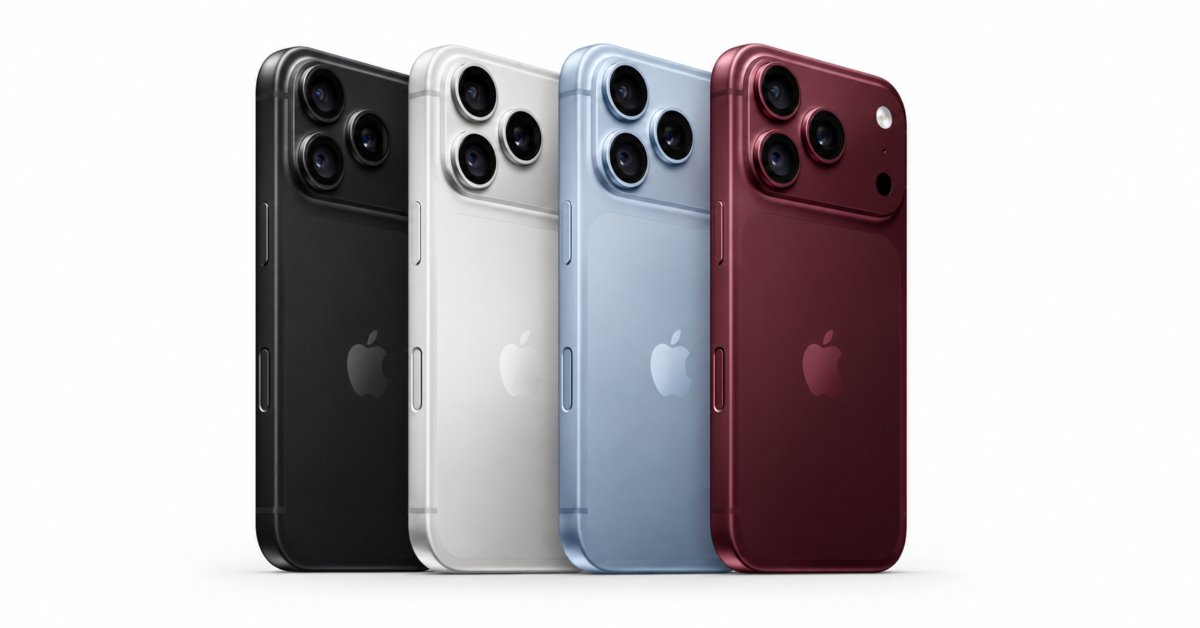
Elsewhere, Apple has shrunk the Dynamic Island and made it capable of displaying three Live Activities simultaneously. The iPhone 18 Pro and Pro Max come in black, silver, glacier, and a new burgundy finish, with storage options of 256GB, 512GB, 1TB, and 2TB.
The iPhone 18 Pro starts at $1,199, while the iPhone 18 Pro Max starts at $1,299. Pre-orders begin Saturday, September 12 at 5 a.m. PT, with availability starting Friday, September 18, while iOS 27 arrives September 14 alongside Apple Intelligence and the initial Siri AI beta.
On paper, the iPhone 18 Pro looks like a more interesting annual upgrade than simply getting a faster processor and slightly better cameras. Variable aperture brings genuine new camera hardware, the battery gains could be noticeable every day, and improved cooling should help A20 Pro maintain its performance.
Siri AI is the wild card, especially when Apple is making it such a central part of the iPhone 18 Pro story. It is launching in beta, some features have usage limits, and Apple already plans to charge for expanded AI access, so now the company has to prove its new Siri can live up to the hardware surrounding it.
Support independent tech journalism
NERDS.xyz is independently owned and operated. If you enjoy my coverage of Linux, AI, hardware, cybersecurity, and tech culture, consider supporting the site on Ko-fi.
Support NERDS.xyz