
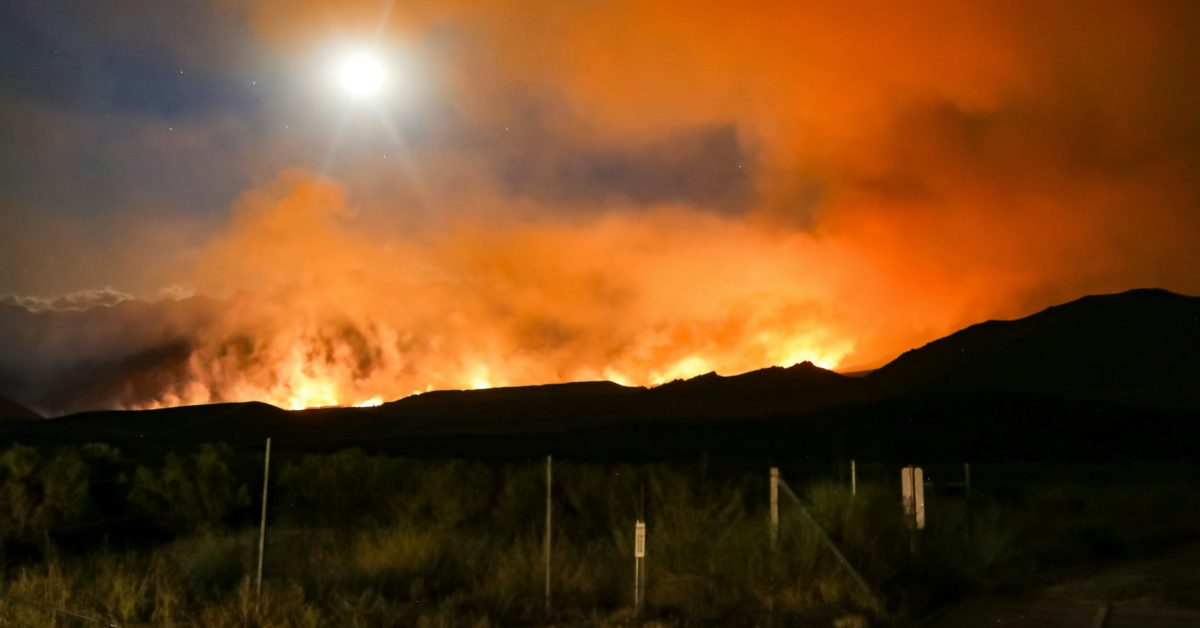
Artificial intelligence gets shoved into plenty of products that do not need it, but detecting wildfires before they spread could be one of its more convincing uses.
Microsoft’s AI for Good Lab is working with ALERTCalifornia, a University of California San Diego program that operates a growing network of cameras across fire-prone parts of the state. Its AI analyzes live images for early signs of smoke, potentially warning firefighters before anyone calls 911.
ALERTCalifornia now has nearly 1,300 cameras and processes more than 7 million images each day. According to Microsoft, the system has detected a wildfire as much as 2.5 hours before the first emergency call.
That extra time could make an enormous difference. A small fire may require only a limited response, while one allowed to spread can threaten homes, force evacuations, and consume far more firefighting resources.
“If you detect a fire early, you can stop it with a shovel. If you wait, you’ll need a bulldozer, air tanker, and maybe even a miracle,” said Juan Lavista Ferres, corporate vice president and chief data scientist at Microsoft’s AI for Good Lab.
The cameras continuously scan California landscapes while the AI looks for visual patterns associated with smoke. It must separate possible fires from clouds, fog, dust, and changing light. When the system identifies something suspicious, it compares different camera views, attempts to locate the source, and alerts human operators.
Firefighters still make the decisions. The AI does not dispatch crews or determine how they should respond. Instead, it gives emergency personnel access to live images and additional information before they arrive.
“We gain so much knowledge in the first five minutes. That early understanding informs everything that follows,” said Zachary Wells, deputy chief of the Kern County Fire Department and deputy director of operations at ALERTCalifornia.
Microsoft points to the 2023 Trotter Fire in Kern County as an example. ALERTCalifornia helped crews detect and contain the fire at 52 acres. Dr. Neal Driscoll, a UC San Diego professor and founder of ALERTCalifornia, estimates that it could have burned nearly 4,000 acres without the imaging system.
That comparison deserves some caution because it describes a hypothetical outcome rather than something anyone can prove. Still, it is not difficult to understand why earlier detection gives firefighters a better chance of containing a fire.
Microsoft is now contributing $5 million to expand the effort. That includes $2 million in technology development and a $3 million Azure grant. The longer-term plan calls for making the underlying platform available to regional partners beyond California, allowing communities to adapt it to local landscapes and fire conditions.
The technology could also help after fires are extinguished. ALERTCalifornia is using nearly 98,000 square miles of LiDAR data to model California’s landscape, monitor forest health, study erosion, and predict landslides. Burned terrain can remain dangerous when heavy rain creates debris flows and other secondary disasters.
However, Microsoft’s presentation gives little attention to the privacy implications of installing an expanding network of powerful cameras.
ALERTCalifornia says its network uses high-definition pan-tilt-zoom cameras with near-infrared night vision. The cameras can perform 360-degree sweeps approximately every two minutes and, under favorable conditions, see as far as 60 miles during the day and 120 miles at night. Members of the public can also view live feeds online.
Most cameras watch mountains, canyons, forests, and other large outdoor areas rather than city streets. This is not a facial-recognition network following people through crowded neighborhoods. Even so, cameras with that kind of range may capture homes, roads, vehicles, workers, and residents living near fire-prone land.
That raises reasonable questions. How long does ALERTCalifornia retain the images? Does it blur faces, license plates, or private property? Who can access archived footage or control the cameras? Can law enforcement request recordings? Could the AI eventually analyze more than smoke?
The public benefit here appears substantial, but good intentions do not eliminate the possibility of misuse or mission creep. A system designed to detect fires today could gain additional capabilities later, especially as Microsoft and ALERTCalifornia work to expand it beyond California.
AI cannot extinguish a wildfire, and it cannot replace the judgment of experienced firefighters. It can apparently give them something increasingly valuable… more time. If this camera network grows, however, its privacy protections should become just as visible as the smoke it was built to detect.
Support independent tech journalism
NERDS.xyz is independently owned and operated. If you enjoy my coverage of Linux, AI, hardware, cybersecurity, and tech culture, consider supporting the site on Ko-fi.
Support NERDS.xyz