
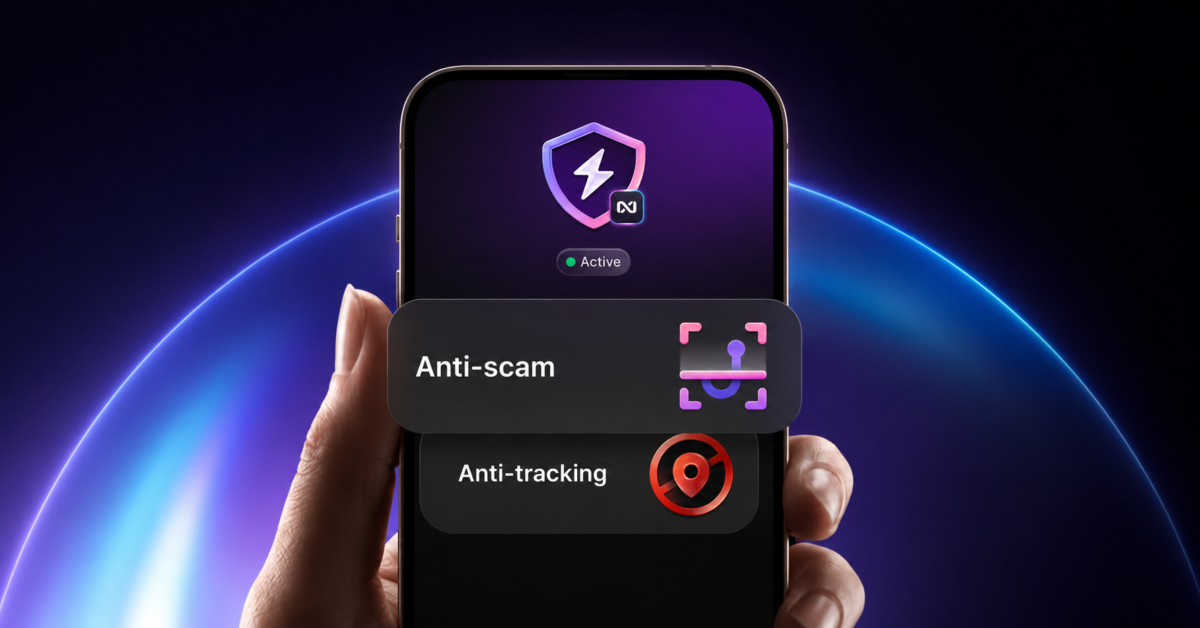
For years, NordVPN has been known primarily as a VPN service. If you wanted to hide your IP address, encrypt your internet traffic, or access content from another region, chances are you’ve heard of it. But these days, NordVPN seems less interested in being just a VPN and more interested in becoming a full-blown security company.
The latest example comes from new testing conducted by independent cybersecurity testing organization AV-Comparatives. According to the results, NordVPN’s “next-gen antivirus” feature detected 96 percent of phishing websites while producing zero false positives during the test.
The evaluation included 275 active phishing URLs targeting services such as PayPal, online banking platforms, email providers, and social networks. Another 200 legitimate banking websites were used to verify that legitimate sites were not incorrectly flagged as malicious.
While a 96 percent detection rate is certainly respectable, the bigger story here may not be the score itself. Instead, it is what the result says about NordVPN’s direction as a company.
VPN providers used to focus on privacy. Today, many are expanding into broader security offerings. NordVPN now bundles features such as phishing protection, malware blocking, tracker and ad blocking, dark web monitoring, password management, encrypted cloud storage, and more. At some point, the distinction between a VPN provider and a security suite starts to blur.
According to NordVPN, its phishing detection rate improved by six percentage points compared to the previous AV-Comparatives test conducted in 2025. The company also notes that it became the first VPN provider to receive AV-Comparatives’ anti-phishing protection badge back in 2024.
Of course, consumers should keep these results in perspective. Modern web browsers already include phishing protection, and operating systems often provide their own layers of security. A strong test result does not mean users can abandon common sense online. Cybercriminals continue to evolve their tactics, and even a 96 percent detection rate means some malicious sites can still slip through.
Still, it is hard to ignore how much NordVPN has changed. What started as a privacy-focused VPN service increasingly looks like a traditional cybersecurity platform that happens to include a VPN.
Whether that evolution is a smart move or just another example of software companies piling on features is open for debate. One thing is becoming clear, however: NordVPN no longer wants to be known solely as a VPN provider.
What do you think about the trend of VPN companies expanding into antivirus and security software? Is it a natural evolution, or are these companies trying to be too many things at once? Let me know in the comments below.
Support independent tech journalism
NERDS.xyz is independently owned and operated. If you enjoy my coverage of Linux, AI, hardware, cybersecurity, and tech culture, consider supporting the site on Ko-fi.
Support NERDS.xyz