
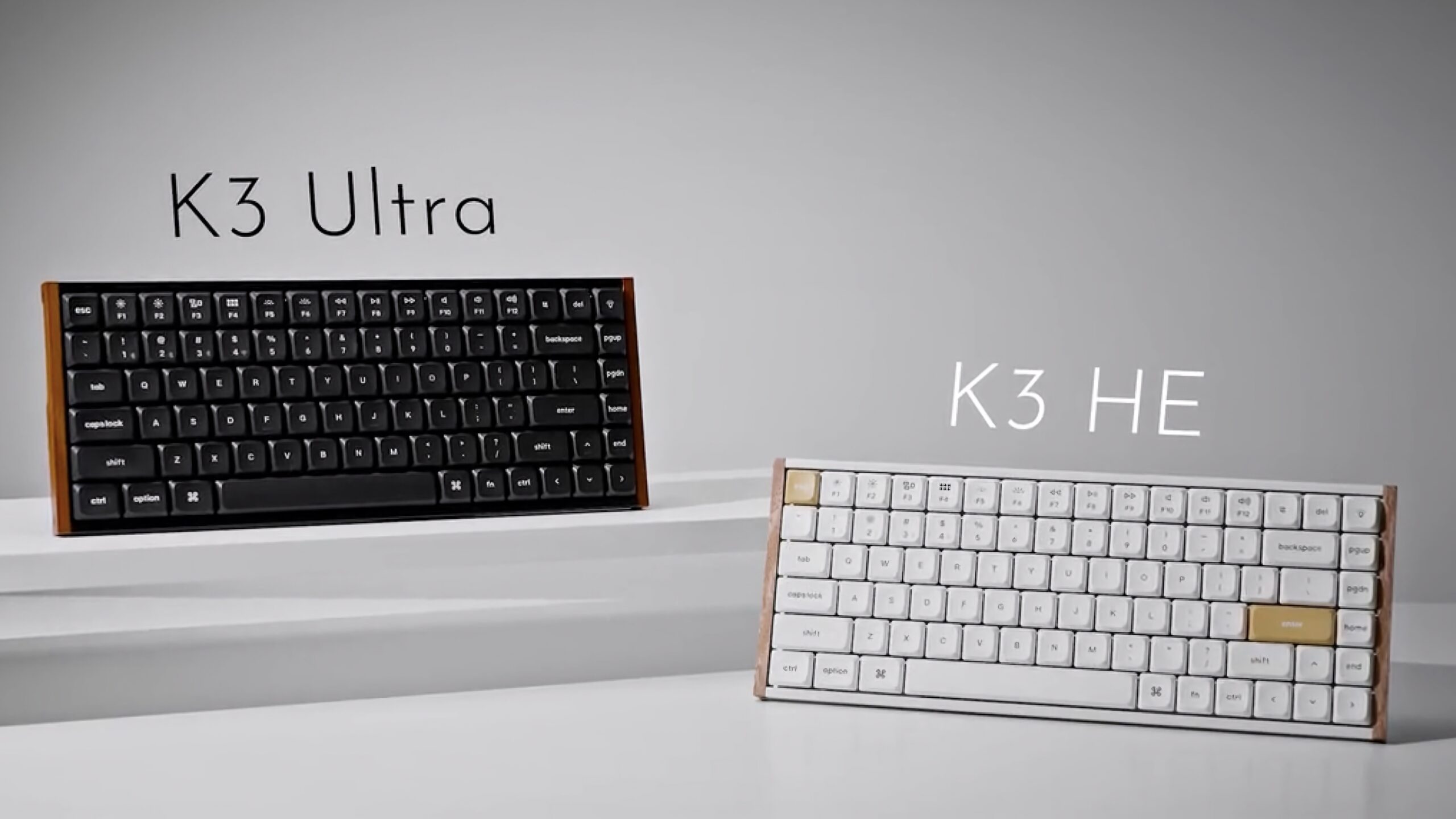
Low-profile keyboards used to come with clear compromises. You gained portability and a sleeker desk setup, but you often lost deeper customization, richer acoustics, or truly high-end performance. Keychron appears ready to challenge that assumption with two new models that take very different approaches to what a thin keyboard can be.
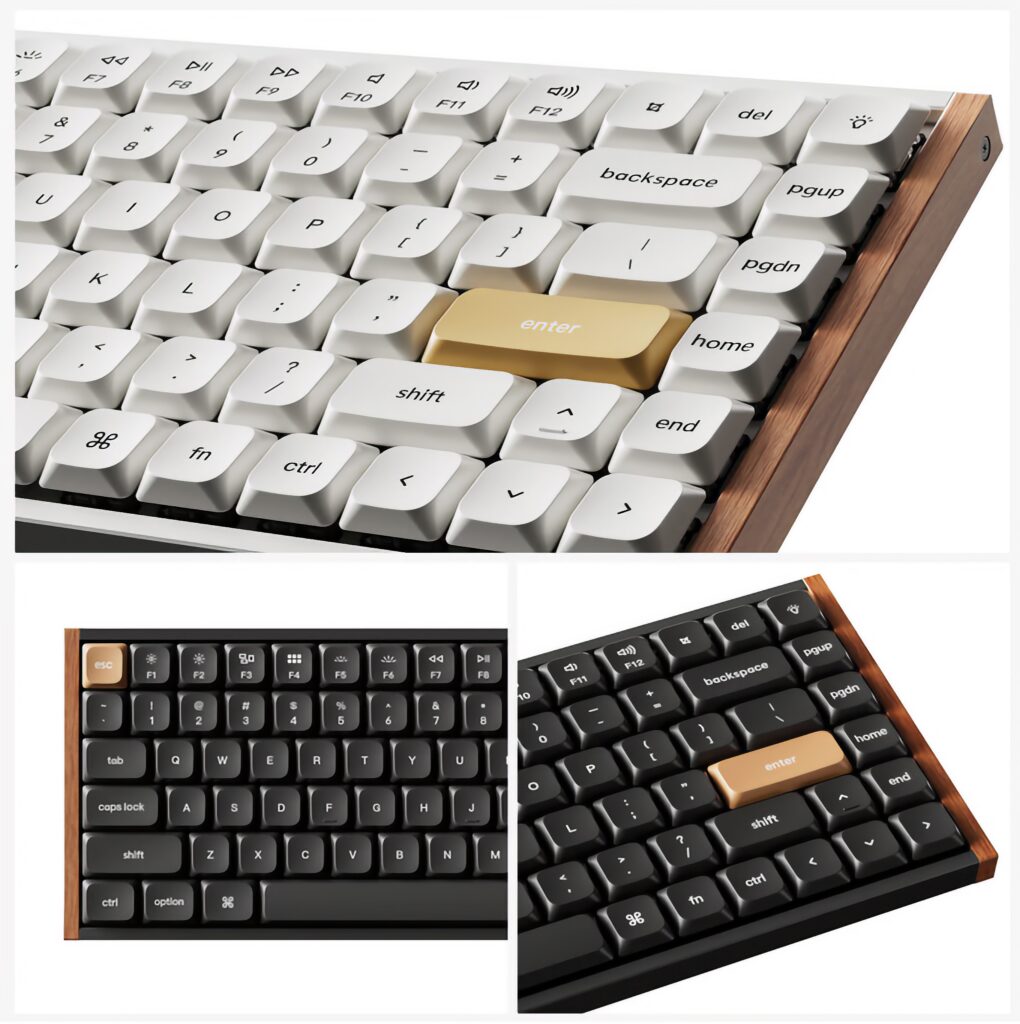
The company has launched a crowdfunding campaign for the Keychron K3 HE and Keychron K3 Ultra 8K, two 75 percent low-profile custom keyboards built around a shared slim chassis. Both feature a minimalist industrial design, a metal body, and a natural rosewood frame. Early backers can support the campaign here starting at $109.99.
At a glance, the two boards look nearly identical. They both support 2.4GHz wireless, Bluetooth, and wired connectivity, and can connect to up to three devices across macOS and Windows systems. Core features include hot-swappable switches, dynamic backlighting, and programmable layouts through the Keychron Launcher web app. The keyboards also use LSA low-profile double-shot PBT keycaps and incorporate a multi-layer acoustic structure that stacks the keycap, switch, plate, and sound-absorbing foam to improve typing sound without increasing thickness.
Where they differ is in philosophy.
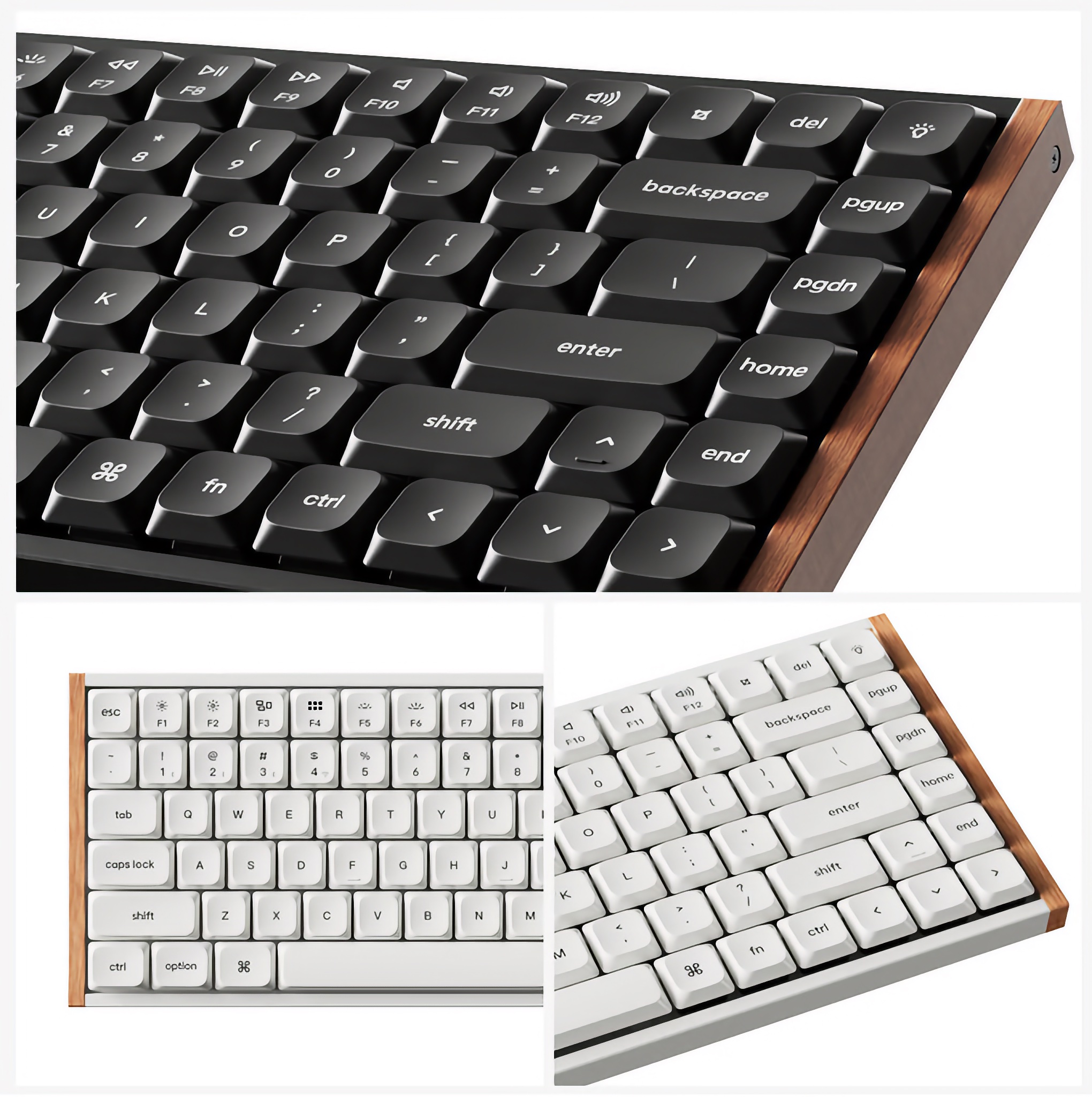
The Keychron K3 HE is built around Hall Effect magnetic sensing. Instead of traditional contact-based actuation, it uses magnetic detection to enable distance-based trigger and reset. That allows for adjustable actuation depth and Rapid Trigger functionality for near-instant key reset. It also includes Last Key Priority and Snap Click modes, which resolve simultaneous key presses based on press order or depth.
Users can assign multiple commands to a single key and even tap into gamepad-style analog input behavior. The board uses Keychron Ultra-fast Lime low-profile magnetic switches and supports open-source QMK firmware alongside the Keychron Launcher web app. For Linux users and customization enthusiasts, QMK support remains a major advantage, since it avoids locking users into proprietary configuration tools.
The Keychron K3 Ultra 8K takes a different path. Instead of focusing on adjustable actuation and analog-style input, it emphasizes wireless responsiveness and battery longevity. Keychron says the board delivers an 8000Hz wireless polling rate with input response as low as 0.125 milliseconds.
Battery life is another headline figure. The company claims up to 550 hours in 2.4GHz wireless mode using efficient ZMK firmware. This model uses Keychron low-profile Milk POM mechanical switches, pre-lubed for consistency and durability, and remains fully programmable through the web-based Keychron Launcher for remapping, macros, and shortcuts.
Paul Tan, Co-founder at Keychron, described the intent behind the release in his own words: “Our goal with these releases is to reduce friction between intent and action. Input can be tuned for precision or respond with ultra-low latency during extended wireless use, depending on how the keyboard is configured.”
He added, “Low-profile no longer has to mean limited. With these K3 models, users can choose between magnetic precision or high-performance wireless input while keeping the same slim form factor and build quality.”
The message is clear. One board is engineered for granular control and variable actuation, appealing to competitive gamers and power users who want to tune every keystroke. The other targets users who are especially sensitive to latency and want the fastest possible wireless response combined with long endurance between charges.
The broader takeaway is that low-profile keyboards are no longer being positioned as secondary or aesthetic-first devices. With magnetic sensing, open-source firmware, 8000Hz wireless polling, and aggressive battery claims, Keychron is treating thin boards as serious enthusiast hardware.
Crowdfunding always carries its own considerations, and potential backers will have to decide whether these features justify getting in early. Still, for anyone who has been waiting for a travel-friendly keyboard that does not sacrifice control or speed, the Keychron K3 HE and Keychron K3 Ultra 8K show that the category is evolving in meaningful ways.
Support independent tech journalism
NERDS.xyz is independently owned and operated. If you enjoy my coverage of Linux, AI, hardware, cybersecurity, and tech culture, consider supporting the site on Ko-fi.
Support NERDS.xyz