

Samsung is expanding its lower-cost lineup with two new devices that aim to do a lot without asking for flagship money. The Galaxy A17 5G and Galaxy Tab A11+ arrive as entry points into the Galaxy ecosystem, targeting users who want modern features, decent performance, and long-term software support without paying premium prices. Both devices focus on practical upgrades rather than flashy specs, which feels intentional given the audience Samsung is chasing.

The Galaxy A17 5G is positioned as the new starting point for Samsung smartphones, but it does not feel barebones on paper. The phone features a 6.7-inch FHD Plus Super AMOLED display with a refresh rate that goes up to 90Hz. That alone puts it ahead of many budget phones that still rely on LCD panels. The screen is bright, smooth, and well-suited for streaming video, casual gaming, and everyday scrolling.
Battery life is another area Samsung is clearly emphasizing. The Galaxy A17 5G includes a 5,000mAh battery, which should comfortably get most users through a full day and then some. When it does need a recharge, 25W fast charging can bring the battery to around 50 percent in roughly half an hour. That is not cutting-edge by flagship standards, but it is perfectly reasonable at this price point.
On the camera side, Samsung is leaning into consistency rather than gimmicks. The Galaxy A17 5G features a versatile camera system with optical image stabilization, which is still not a given in this segment. OIS should help reduce blur in low-light photos and make handheld video look more stable. The goal here is not to compete with high-end Galaxy S devices, but to deliver photos and videos that look good enough to actually keep and share.
Powering the phone is the Exynos 1330 processor, which is designed to handle daily tasks like streaming, messaging, browsing, and light gaming without frustration. It also enables access to Samsung’s growing set of AI features, including Circle to Search and Gemini. These tools are positioned as convenience features rather than selling points on their own. For example, users can search what is on their screen or ask Gemini to help with simple tasks using conversational prompts. Whether buyers in this price range actually care about AI is another question, but Samsung is clearly making sure these features are not limited to expensive phones.
Durability is another quiet upgrade. The Galaxy A17 5G includes Gorilla Glass Victus on the front and an IP54 rating for basic dust and splash resistance. The back uses a reinforced polymer designed to better handle everyday drops and wear. Perhaps more important than the hardware is Samsung’s software promise. The phone is slated to receive six years of security updates and six generations of Android and One UI upgrades, which is unusually long support for a budget device.
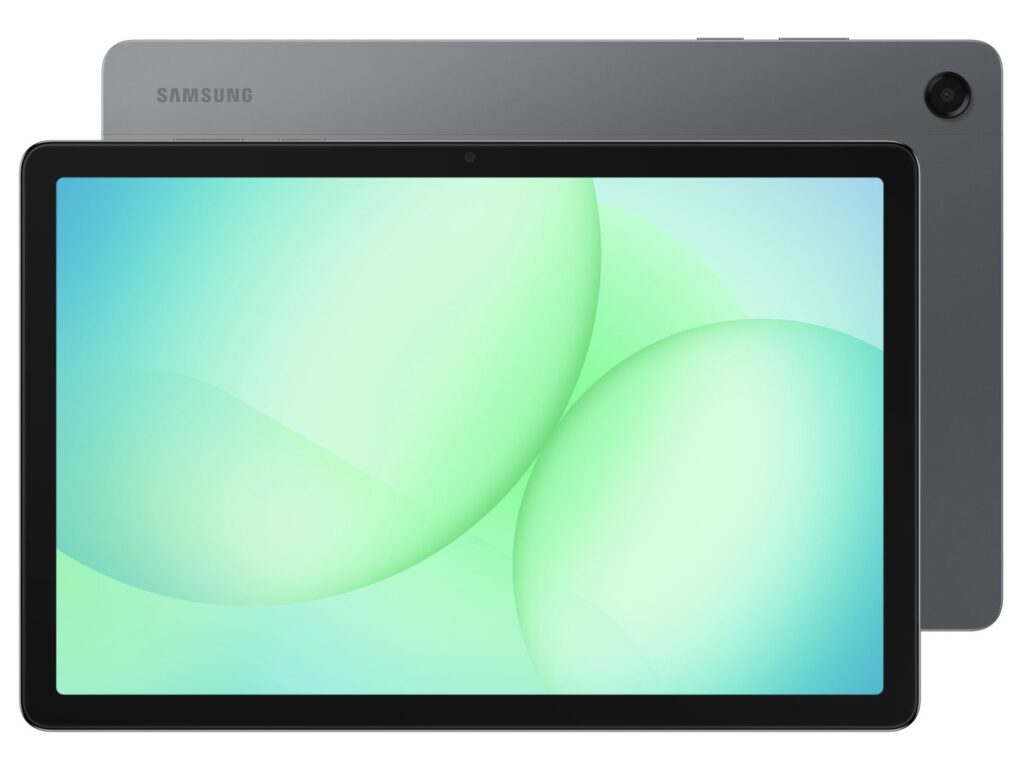
The Galaxy Tab A11+ takes a similar approach on the tablet side. It is designed as a shared household device, something that can move between parents, kids, and casual users without feeling slow or outdated. The tablet features an 11-inch display with a 90Hz refresh rate and Gorilla Glass 3 protection. It is paired with quad speakers that support Dolby Atmos, making it a solid option for streaming movies or shows. Samsung also kept the 3.5mm headphone jack, which is still appreciated on tablets used by kids or in shared spaces.
Performance on the Galaxy Tab A11+ is aimed at everyday use rather than power users. The processor is tuned for multitasking, streaming, and casual gaming, and it is backed by a battery that supports 25W fast charging. Samsung claims charging speeds are noticeably faster than the previous generation, which matters for a tablet that might be passed around and used intermittently.
Samsung is also bringing several of its AI features to the Galaxy Tab A series for the first time. Circle to Search works on the tablet, and Gemini can be accessed with a press of the power button. These features are meant to help with quick lookups, homework questions, or simple productivity tasks. Samsung Notes plays a role here too, supporting sketches, handwritten notes, and even basic math problem solving. DeX Standalone mode is included as well, allowing the tablet to switch into a desktop-style interface when users want a more laptop-like experience.
Design-wise, the Galaxy Tab A11+ borrows visual cues from Samsung’s higher-end devices, including cleaner lines, refined speaker cutouts, and a more premium overall look. Samsung is also offering a Book Cover accessory that allows the tablet to stand in both portrait and landscape modes while adding basic protection.
In terms of pricing and availability, the Galaxy A17 5G goes on sale in the United States starting January 7. It will be available through major carriers and retailers, as well as Samsung Experience Stores. The phone starts at $199.99 and includes 4GB of RAM and 128GB of storage, with microSD expansion up to 2TB. The Galaxy Tab A11+ follows on January 8, starting at $249.99. It offers configurations with up to 8GB of RAM and 256GB of storage, along with optional 5G connectivity and microSD expansion.
Support independent tech journalism
NERDS.xyz is independently owned and operated. If you enjoy my coverage of Linux, AI, hardware, cybersecurity, and tech culture, consider supporting the site on Ko-fi.
Support NERDS.xyz