
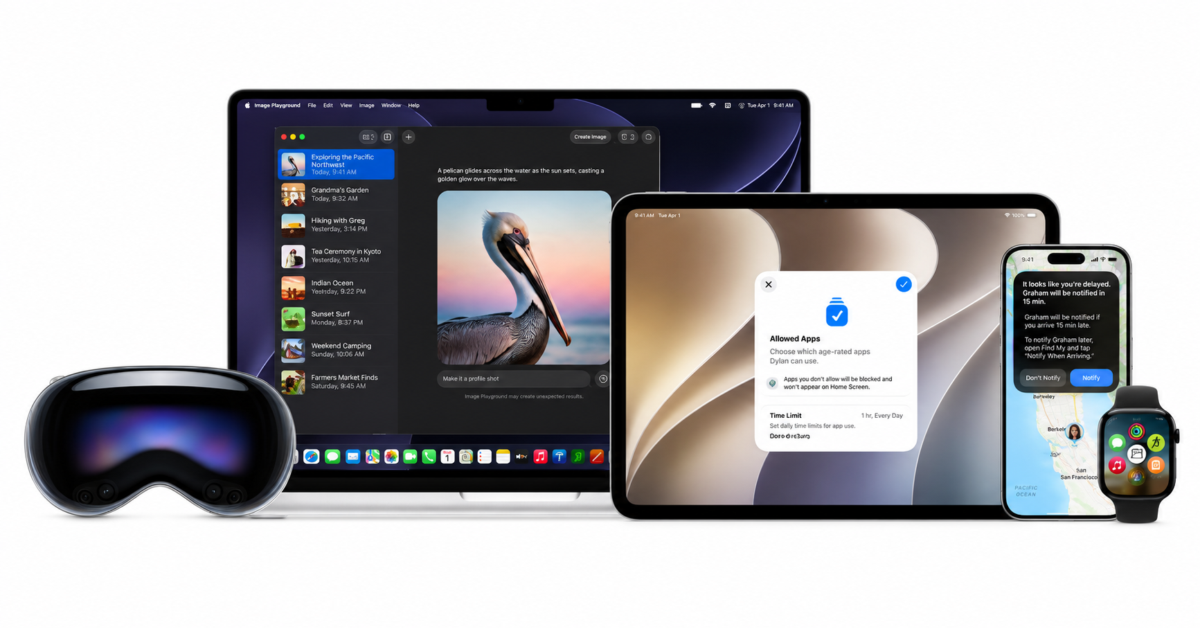
Apple did not announce a folding iPhone at WWDC26. It did not unveil some weird headset successor either.
Instead, the company spent nearly the entire keynote trying to convince the world that the iPhone itself still matters in the AI era.
That is what iOS 27 really is.
Yes, Apple talked endlessly about artificial intelligence. Yes, Siri finally got the overhaul people have been begging for. But the bigger story is that Apple seems to be rebuilding the overall iPhone experience around intelligence, personalization, and usability instead of simply slapping a chatbot onto the home screen and calling it innovation.
Honestly, that is probably the right move.
Most people are not waking up in the morning excited to “use AI.” They just want their phones to waste less of their time.
And after watching Apple spend the past year getting mocked for Siri delays and half-finished AI promises, WWDC26 felt like a company trying to regain control of the narrative.
At the same time, many of Apple’s demonstrations felt strangely disconnected from how people actually use their iPhones in the real world.
There were plenty of polished AI demos involving summarizing emails, organizing tabs, and asking Siri to retrieve obscure information from apps. But Apple spent surprisingly little time addressing the small frustrations that affect users every single day.
Most notably, the company barely acknowledged the iPhone keyboard and autocorrect situation.
That omission stood out.
People complain about iPhone autocorrect constantly. Users joke online about the keyboard somehow getting worse over time. Yet during a keynote focused heavily on AI and machine learning, Apple never really explained how these technologies would improve one of the most frustrating parts of using an iPhone.
Let’s be honest, folks, smarter autocorrect would probably improve daily life more than half the keynote demos.
Liquid Glass finally stops fighting users
Last year’s Liquid Glass redesign looked cool in screenshots.
Using it every day was another story.
The transparent interface elements sometimes made iOS feel harder to read, harder to navigate, and occasionally more concerned with aesthetics than practicality. Social media was filled with complaints from users wondering why Apple suddenly wanted menus and controls blending into everything behind them.
To Apple’s credit, the company did not double down and pretend everyone else was wrong.
Instead, iOS 27 refines Liquid Glass in ways that actually seem useful. Users can now reduce transparency and make interface elements more opaque, helping improve readability throughout the operating system.
That may sound like a tiny change, but small usability fixes matter more than flashy keynote demos. People interact with the design of iOS thousands of times every single day. If something feels annoying, users notice quickly.
The updated Liquid Glass design still looks modern and futuristic, but now it feels like Apple spent time listening to criticism instead of treating it as noise.
That is a good thing.
Siri finally enters the modern era
Of course, the biggest WWDC26 announcement was Siri AI. And look, Apple needed this badly.
For years, Siri became the assistant people laughed at while competitors sprinted ahead. Google shoved Gemini into everything. Microsoft turned Copilot into the centerpiece of Windows. OpenAI made ChatGPT mainstream almost overnight.
Meanwhile, Siri still felt like it was living in 2017.
Apple says the new Siri can understand personal context, recognize what is happening on screen, maintain conversational awareness, and perform actions throughout apps and the operating system. Users can ask Siri to locate information buried inside emails, messages, photos, calendars, and apps without manually digging through everything themselves.
That sounds much closer to what people expect from AI assistants in 2026.
Apple also introduced a dedicated Siri app and synchronized conversation history across devices through iCloud. The company clearly wants Siri to evolve from a basic voice command tool into something that behaves more like a true digital assistant.
Will it work? Maybe.
Apple’s AI promises over the past year have not exactly inspired confidence. But this is at least the first time in a long while that Siri actually sounds competitive again.
And frankly, it had to happen. Apple could not afford another year of Siri memes.
Apple Intelligence spreads across the entire iPhone
The bigger shift is not Siri itself. It is the way Apple Intelligence now touches nearly every part of iOS 27.
Safari can intelligently organize tabs and monitor websites for changes. Messages gains smarter contextual awareness. Writing tools become more system-wide. Passwords receives improvements designed to simplify account management. AI features are quietly appearing throughout the operating system instead of being locked inside a separate app.
That is a very Apple way of approaching AI.
The company is basically betting that normal people do not want to constantly open chatbot windows and type prompts all day long. Instead, Apple wants the iPhone itself to become smarter in the background.
You know what? Apple might be right about that.
A lot of AI products still feel like work. They are impressive during demos, but using them regularly can sometimes feel exhausting. Apple’s approach appears focused on reducing friction instead of trying to turn every user into a prompt engineer.
And that is probably much closer to what mainstream consumers actually want.
Still, some of the WWDC demonstrations lacked urgency.
Apple showed plenty of polished scenarios, but there were moments where the keynote felt almost too sanitized and corporate. Real users deal with spam texts, notification overload, autocorrect disasters, app clutter, terrible search experiences, and battery anxiety. Some viewers were probably hoping Apple would spend more time addressing those practical frustrations instead of showcasing AI-generated summaries and highly choreographed workflows.
That disconnect was hard to ignore.
Apple wants people to care about Photos again
The Photos app also receives meaningful updates in iOS 27, and Apple clearly understands why this matters.
People practically live inside their photo libraries now. Family memories, vacations, pets, screenshots, receipts, memes, random parking spot photos, grocery lists, and thousands of videos all end up there.
So when Photos feels messy or frustrating, users notice immediately.
Apple is adding smarter search capabilities, AI-powered editing tools, cleanup improvements, and reframing features that can automatically improve compositions. The company is also trying to make it easier to locate specific content buried inside massive photo libraries.
That may not sound as flashy as Siri AI, but it honestly might end up being more useful for many people.
Because unlike AI chatbots, people actually use Photos constantly.
Apple is also thinking about parents
One of the more overlooked parts of WWDC26 involved child safety and parental controls.
Apple is expanding protections for children throughout iOS 27 with stronger communication safeguards, additional parental controls, safer browsing experiences, and more oversight over apps and online interactions.
Parents will gain more control over who can contact children, what content they can access, and how younger users interact with services throughout the Apple ecosystem.
Given how chaotic the internet has become lately, these updates honestly feel pretty important.
Parents are trying to raise kids in a world filled with addictive apps, AI-generated junk content, endless algorithmic feeds, scams, and social media pressure that barely existed a decade ago.
Apple is clearly trying to position itself as the company that introduces AI while also putting guardrails around it.
Whether that approach succeeds remains to be seen, but at least the company seems aware that technology companies cannot just throw powerful AI tools into the world and pretend there are no consequences.
iOS 27 feels bigger than an AI update
Calling iOS 27 an AI release actually undersells what Apple announced.
This update is really about Apple trying to redefine what using an iPhone feels like going forward. Siri is smarter. Core apps are becoming more intelligent. Liquid Glass feels more mature. Photos is getting useful improvements. Parents gain better safety tools.
More than anything else, WWDC26 finally made Apple seem less confused about AI.
For much of the past year, the company looked reactive while competitors dominated headlines. WWDC26 felt like Apple finally settling on a direction instead of scrambling to catch up.
Of course, keynote presentations are easy. The real test comes when millions of people actually install iOS 27 and live with these features every day.
Still, compared to where Apple was a year ago, this felt like a much more confident company. Even if Apple still somehow cannot fully fix autocorrect…
Support independent tech journalism
NERDS.xyz is independently owned and operated. If you enjoy my coverage of Linux, AI, hardware, cybersecurity, and tech culture, consider supporting the site on Ko-fi.
Support NERDS.xyz