

It is 2026 and we are all walking around with supercomputers in our pockets, yet many folks are still locking their digital lives with keys that a toddler could guess. A new survey from PasswordManager.com lays out what many security pros already suspected. Americans are still using weak passwords, repeating the same ones everywhere, and leaning on easy personal details that hackers can scrape from Instagram.
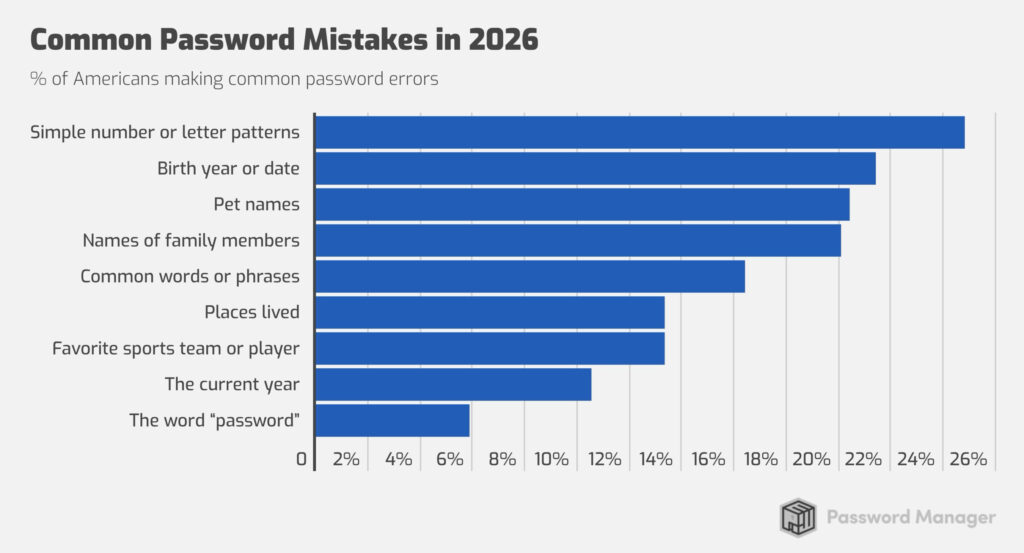
The survey polled 1500 adults across the United States and found that 84 percent reuse passwords. That means logging into banking, social media, shopping, email, and work accounts with the same phrase or a slightly tweaked version. Even scarier, 65 percent admitted they use predictable patterns or personal trivia. Birth years, family member names, and pet names remain common choices.
It is almost unbelievable that six percent still use the literal word password, but here we are!
Folks say they know a better approach exists, but they still avoid doing the work. Nearly half of respondents blame forgetfulness. They worry that if they swap out their go to combination, it will slip their mind at the worst time. Forty percent said updating passwords feels inconvenient. You can sympathize because we have all been locked out of something important when a reset email gets stuck in spam or arrives late at night. Unfortunately, that convenience tradeoff creates a huge attack surface once criminals get a foothold.
About two in five Americans have already been notified that an account of theirs was involved in a breach or hack. It is not hypothetical. Notifications from banks, retailers, credit agencies, and streaming services hit inboxes monthly. Most people do take action after being burned, but ideally you want strong security before trouble shows up.
Despite the hesitation, folks seem open to stronger logins once someone else pushes them forward. Two factor authentication shows this reality clearly. Forty three percent enable it any time it is offered, and another 43 percent only do it when a website requires it. So the interest is there. People just want a nudge.
Passkeys also appear to be gaining awareness. Seventy four percent said they are at least somewhat familiar with passkeys, and two thirds say they would be willing to switch. Folks want assurance that passkeys genuinely improve security and a clearer understanding of how the technology works. You can hardly blame them because the security industry often buries everyday consumers in jargon.
Password managers are one tool that removes friction while improving safety. Remembering dozens or hundreds of unique passwords is not realistic for most of us. A vault that generates and stores long random passwords is far safer than sprinkling Fluffy2019 across your digital life. The survey suggests that only 23 percent use one currently, which means plenty of room to improve.
We sit at a weird crossroads in digital life. Hackers use advanced tools and stolen data to crack accounts automatically, while average folks still rely on the same password habits they formed in the 2000s. People know they should do better. They just need a mix of education, nudges from companies, and tools that make security easy.
A password that includes your kid’s birthday or your favorite baseball player might feel harmless, but the internet will happily piece together those clues. If you have ever posted a picture of your cat on social media, someone already knows half your login. That is why it is best to treat passwords like toothbrushes. You do not share them, you replace them, and you do not use the same one everywhere.
Strong unique passwords plus two factor authentication and a manager to help you keep track of everything is the modern baseline. It sounds tedious, but the alternative is waking up to a drained checking account or a stolen identity. Fixing your passwords is a lot easier than rebuilding your online life.
Support independent tech journalism
NERDS.xyz is independently owned and operated. If you enjoy my coverage of Linux, AI, hardware, cybersecurity, and tech culture, consider supporting the site on Ko-fi.
Support NERDS.xyz