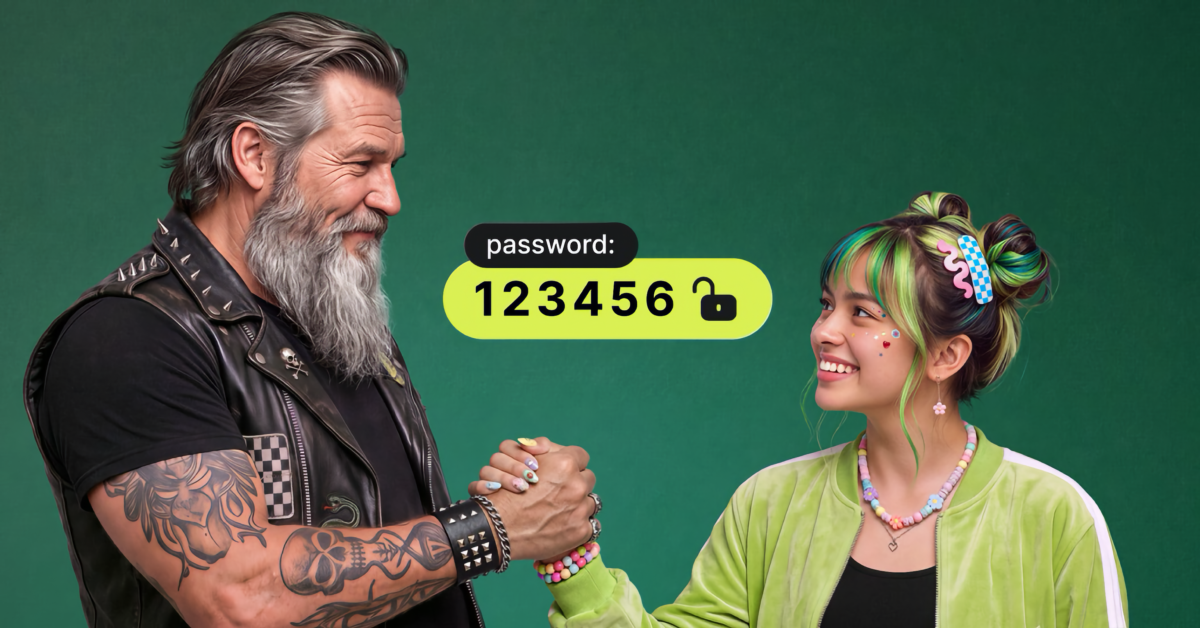
There are plenty of ways to express your love for a band, video game, or internet meme. Buy a shirt, put a sticker on your laptop, or annoy your friends by talking about it constantly. Making it the password protecting your personal information is probably where that enthusiasm should stop.
Apparently, some people disagree. NordPass has released its eighth annual Most Common Passwords report, and alongside the usual depressing number combinations are credentials inspired by everything from Metallica and Naruto to Minecraft and Skibidi Toilet.
Yes, “skibiditoilet” is among the passwords identified in the research. A viral toilet meme might be memorable, but that does not make it a good choice for protecting an account.
The NordPass research covers 44 countries and examines passwords exposed between September 2025 and September 2026. NordPass worked with NordLayer Intelligence and independent researchers, analyzing public breach data and dark web repositories.
That methodology is significant, folks. These rankings describe passwords found in the exposed data researchers analyzed, rather than a representative survey of everyone who uses the internet. The dataset cannot tell us what every American is typing into a login screen.
With that qualification, the US results are still embarrassing. According to the company’s announcement, “123456” reclaimed first place from “admin,” while “password” finished second.
Here is the full US top 20 from the report. Capitalization matters, so “password” and “Password” appear as separate entries.
- 123456
- password
- admin
- 12345678
- Password
- 123456789
- 1234
- user@123
- 12345
- Password1
- qwerty123
- 12345678910
- secret
- 1234567890
- abc123
- Welcome1
- 123123
- password1
- Password1!
- 1234567
Five entries are variations of “password,” including “Password1” and “Password1!” Numeric sequences occupy nine positions, giving the list the general appearance of someone testing whether a keyboard works.
Globally, “123456” also holds first place, followed by “admin” and “12345678.” Different countries and different cultural interests apparently still produce some very familiar login credentials.
The pop culture findings are more entertaining, although they point to another predictable habit. People reach for something familiar when they need a password they can remember, and favorite characters, musicians, and games provide plenty of material.
NordPass identified music-inspired examples such as “metallica” and “Slayer007,” along with movie references including “corleone13” and “Rambo017.” Anime fans contributed “sasuke,” “Narutofoda2,” and “Bleach15,” while gaming examples included “minecraft” and “Templerun303.”
Sports fans were represented too, with passwords such as “Lewandowski1234!” and “neymar10.” More recent cultural references included “squidgamethebest” and “roblox.com1,” while “Covid@19” and “corona2020” brought back memories most of us would rather leave behind.
There is an important limit to the generational framing, however. A Metallica password does not establish that its owner created it in the 1980s or 1990s, or even that the person was alive then. The references can suggest cultural influences without revealing the age of the account holder or the password.
“Passwords are rarely random. When people need something they’ll remember, they fall back on what they already know well,” says Karolis Arbaciauskas, head of product at NordPass and its parent organization Nord Security.
That familiarity is exactly what makes these examples so unconvincing as secrets. You might have a deeply personal connection to a particular game, but millions of other people have played it too. Adding a number to its name does not make the underlying choice especially original.
The report also offers a useful reminder about special characters. NordPass says 39 passwords in this year’s global top 200 contain them, compared with 32 last year, but examples such as “P@ssw0rd” and “Admin@123” show why checking a complexity box is not the same as choosing an unpredictable password.
An exclamation point cannot do all the work. If the basic password is already common, a familiar substitution or suffix does little to change the thinking behind it.
NordPass recommends unique passwords for each account, strong randomly generated credentials or passphrases, and multi-factor authentication. It also recommends a password manager, which is hardly surprising given that the company sells one.
That commercial interest deserves acknowledgment, but readers do not need to buy NordPass to take the findings seriously. The useful takeaway is to stop treating a favorite franchise, a predictable number sequence, or a slightly decorated version of “password” as a suitable secret.
I understand wanting something memorable, especially when seemingly every service requires another account. Still, you can love Metallica without asking the band to protect your email, and Skibidi Toilet has already taken up enough of the internet without taking responsibility for your login credentials too.
Support independent tech journalism
NERDS.xyz is independently owned and operated. If you enjoy my coverage of Linux, AI, hardware, cybersecurity, and tech culture, consider supporting the site on Ko-fi.
Support NERDS.xyz