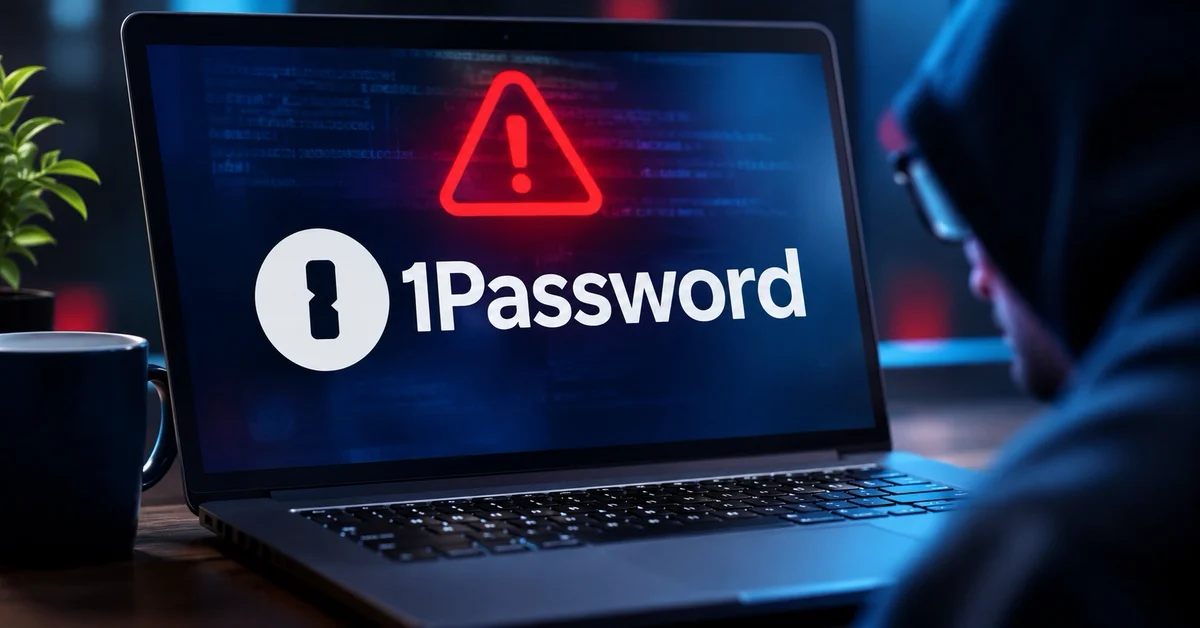
Well, folks, this is certainly not the sort of news you want to hear from a password manager. 1Password has disclosed a security breach involving its backend systems, confirming that an attacker stole customer account information and gained access to private source code.
Thankfully, there is some good news. The company says customer vaults were not compromised, meaning the passwords, credit card details, secure notes, and other sensitive information stored inside them remain protected.
According to a security incident disclosure from 1Password, the company began investigating on November 19, 2026, after discovering indications that an attacker had gained access to an employee’s corporate GitHub account. The attacker subsequently accessed source code and pushed malicious code to backend services to collect customer information.
The stolen information includes customer names, email addresses, account identifiers, account creation dates, last sign-in times, public keys, Secure Remote Password protocol parameters, and various pieces of internal metadata. Tokens associated with certain account invitations, provisioning requests, and account recovery emails were also exposed.
Perhaps even more concerning is that the attacker gained access to the company’s continuous integration and continuous delivery (CI/CD) infrastructure. In other words, this incident went beyond someone simply getting their hands on a customer database.
1Password says it has taken steps to rotate or revoke potentially exposed internal credentials, restore clean versions of affected services, and strengthen its internal security controls. Independent cybersecurity experts have also been brought in to validate its containment and remediation efforts.
As for those exposed invitation and recovery tokens, 1Password explains that they cannot provide access to an account on their own. Additional authentication is required. As a precaution, however, the company has replaced its six-digit verification codes with ten-character alphanumeric codes for these processes.
1Password says it has found no internal evidence of account takeovers related to the exposed provisioning tokens. The company also maintains that its applications, browser extensions, and account recovery keys were unaffected.
So, should you immediately change every password stored in your 1Password vault? Based on what we know right now, no. The company’s security architecture is designed to prevent someone who compromises its servers from accessing the contents of customer vaults. Neither your account password nor your Secret Key is stored by the company.
That does not mean customers should simply shrug this off, though. Having the names and email addresses of people known to use a particular password manager could be quite valuable to criminals looking to carry out targeted phishing campaigns. Be particularly suspicious of unexpected account recovery emails, and never provide your Secret Key to someone claiming to represent 1Password.
What bothers me most about this incident is that a compromised employee GitHub account apparently provided a path to introducing malicious code into backend systems. How did that code make its way into production? What safeguards were in place to prevent such a thing from happening? I would very much like to see a detailed technical explanation from the company.
It is also worth noting that 1Password has not disclosed exactly how many customers had their information stolen. Hopefully, the company will provide more details as its investigation progresses.
Look, no technology company is immune to cyberattacks, and a security breach at a password manager does not automatically mean its encryption has failed. In fact, assuming the company’s findings are accurate, its approach to protecting customer vaults appears to have served its intended purpose here.
Still, when your entire business revolves around protecting people’s most sensitive digital information, the expectations are understandably higher. Customers deserve more than reassurance. They deserve a thorough explanation of what went wrong and what is being done to prevent it from happening again.
I certainly would not panic or abandon password managers altogether over this incident. That said, I will be watching closely for further disclosures from 1Password. There are still some important questions that need answering.
Support independent tech journalism
NERDS.xyz is independently owned and operated. If you enjoy my coverage of Linux, AI, hardware, cybersecurity, and tech culture, consider supporting the site on Ko-fi.
Support NERDS.xyz