
Picking a browser for an entire organization means deciding who gets a say in how employees access the web. Mozilla is making that decision the centerpiece of Firefox Enterprise, a new offering aimed at businesses and institutions that need tighter control over their browser environment.
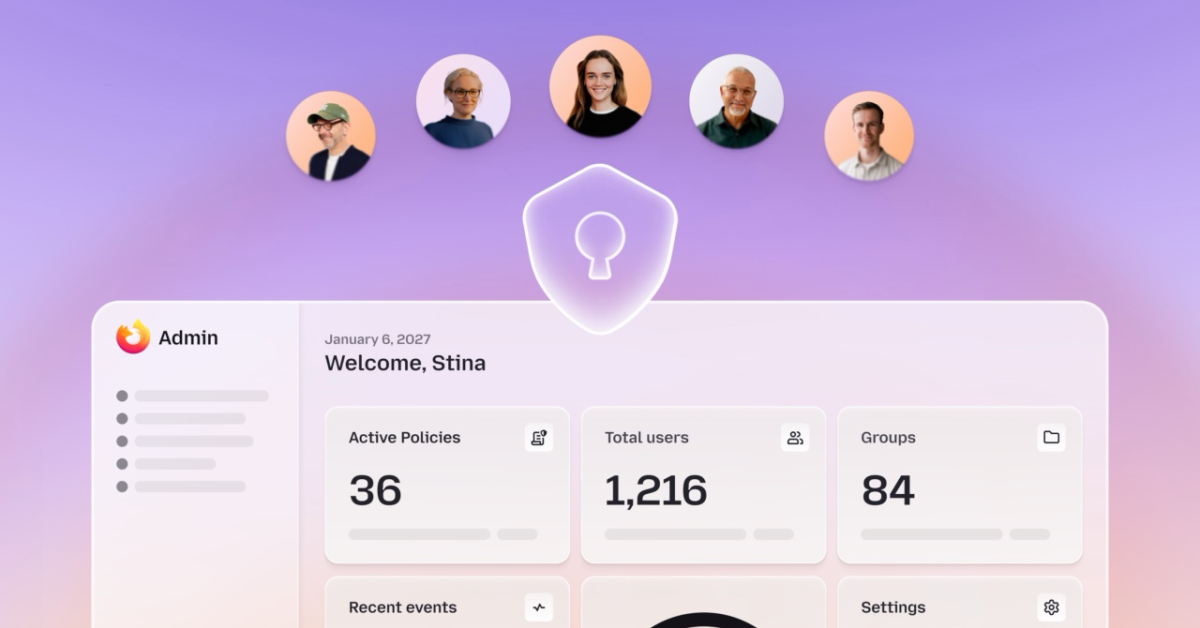
In its announcement, Mozilla describes a package that combines Firefox with a management console organizations can run on their own infrastructure. IT teams can set browser policies, manage access, govern data movement, and control AI use. The initial sales focus covers France, Germany, Austria, and Switzerland, with additional markets planned.
The self-hosted console is the part that catches my attention. An organization considering this approach would need to weigh the responsibility of operating that infrastructure against the benefit of keeping browser management in its own environment. There is a practical buying decision here, even beneath all the talk about digital sovereignty.
Mozilla also makes Gecko central to its pitch. Firefox uses Mozilla’s independent browser engine, giving institutions an alternative to the technology developed by Google and Apple. The company says organizations can retain their existing identity provider, security monitoring, and device management systems.
I think there is a reasonable argument for treating browser diversity as part of technology planning. Choosing an alternative engine only helps, however, if employees can still do their jobs without fighting compatibility problems. Procurement teams should test the applications they actually use before buying into anyone’s independence pitch.
Mozilla’s Firefox Enterprise product page gives a clearer picture of the controls on offer. It lists built-in data loss prevention that can warn about or block sensitive data actions by domain, controls for external connections and telemetry, and organization-wide extension rules. Administrators can also allow, restrict, or disable AI tools.
Those AI controls could be useful for an employer deciding which services may handle company information. The real test would be how precisely administrators can apply those rules. Blocking a tool is straightforward in principle; allowing useful work while preventing inappropriate sharing calls for closer evaluation.
Other listed features include exporting browser events to security monitoring systems and a Lockdown Mode for higher-risk browsing. Firefox Professional Support comes with the enterprise package, providing private issue triage and defined response times. Mozilla does not list a public price on that product page, directing prospective customers to its sales team instead.
There is an email component on the way, too. Thunderbird Enterprise is in development, and Mozilla says its email, calendar, and contacts will eventually have centralized management through the Firefox Enterprise console. It is something to watch, although customers should evaluate the browser offering on what it delivers today.
Honestly, this strikes me as a more useful enterprise pitch than another vague promise that AI will fix everything. Mozilla has identified a concrete reason for an organization to consider Firefox: operating the infrastructure that manages its browsers. Now it needs to prove that the product is worth the cost and work involved.
Support independent tech journalism
NERDS.xyz is independently owned and operated. If you enjoy my coverage of Linux, AI, hardware, cybersecurity, and tech culture, consider supporting the site on Ko-fi.
Support NERDS.xyz