
LG Electronics wants people to think about more than TVs and home appliances. The company is continuing its push into AI infrastructure, announcing that its 600kW Coolant Distribution Unit has earned NVIDIA validation for use in AI Factory deployments.
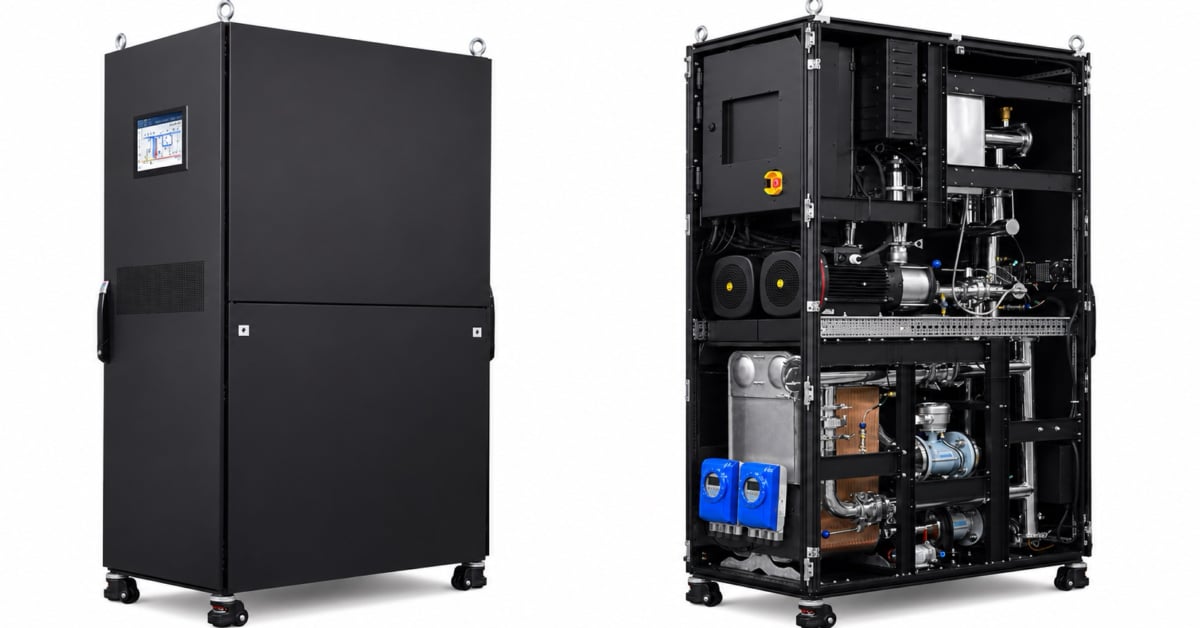
I have to admit, this thing looks amazing. With the outer panels removed, the CDU resembles a towering mechanical puzzle filled with pumps, pipes, sensors, motors, and cooling hardware. It is an impressive example of engineering, especially when you consider that the entire system exists to keep extremely hot AI chips operating reliably.
Cooling has become one of the biggest challenges facing modern AI data centers. Servers packed with high-performance GPUs can generate enormous amounts of heat, and traditional air cooling is no longer enough for many high-density systems. That is pushing operators toward liquid cooling, which can move heat away from processors more directly and efficiently.
According to LG, its 600kW CDU passed NVIDIA’s technical verification process by meeting more than 100 evaluation criteria. Those tests reportedly covered cooling performance, reliability, and failover capabilities.
LG says the validation positions it as an NVIDIA-approved partner for AI Factory infrastructure. For data center operators, that could help simplify the process of evaluating and deploying the system alongside NVIDIA hardware.
The CDU uses direct-to-chip liquid cooling, delivering coolant to cold plates attached to components such as CPUs and GPUs. LG says the system can control coolant temperature within plus or minus 0.25 degrees Celsius.
It also includes virtual sensor technology, real-time monitoring, and leak detection. The unit can connect to LG’s Data Center Cooling Control Manager, which provides centralized monitoring and predictive control while supporting standard data center management protocols.
What makes the product especially interesting is its scale. A 600kW cooling system is not something most people will ever encounter, but the images help communicate just how much machinery is required to support modern AI computing.
The closed cabinet looks fairly plain, almost like an oversized server rack. Open it up, however, and the complexity becomes obvious. There are multiple pumps, heat exchangers, control systems, pipes, valves, and redundant components packed into a single enclosure.
LG is promoting a broader Chip-to-Chiller portfolio rather than just one cooling unit. That lineup includes chillers that produce chilled water, CDUs that distribute coolant, and cold plates that pull heat directly away from AI processors.
The company says it tests these systems at a dedicated validation facility in Pyeongtaek, South Korea. LG evaluates the complete cooling chain there, including chip loads, cold plates, the CDU, and the chiller.
LG also plans to pursue NVIDIA validation for even larger systems. Future CDU models are expected to offer capacities of 1MW, 2.5MW, and 4MW.
That sounds almost absurdly large, but it also shows where AI infrastructure is heading. The GPUs receive most of the attention, yet machines like this are what allow those processors to run continuously without cooking themselves.
LG may still be best known for televisions, monitors, and appliances, but this 600kW CDU is far more interesting to me than another new TV. It is huge, complicated, and visually striking. More importantly, it is a fascinating look at the engineering required to keep the AI boom running.
Support independent tech journalism
NERDS.xyz is independently owned and operated. If you enjoy my coverage of Linux, AI, hardware, cybersecurity, and tech culture, consider supporting the site on Ko-fi.
Support NERDS.xyz