Jack Dorsey is betting that the future of AI teamwork will not just be another chatbot window.
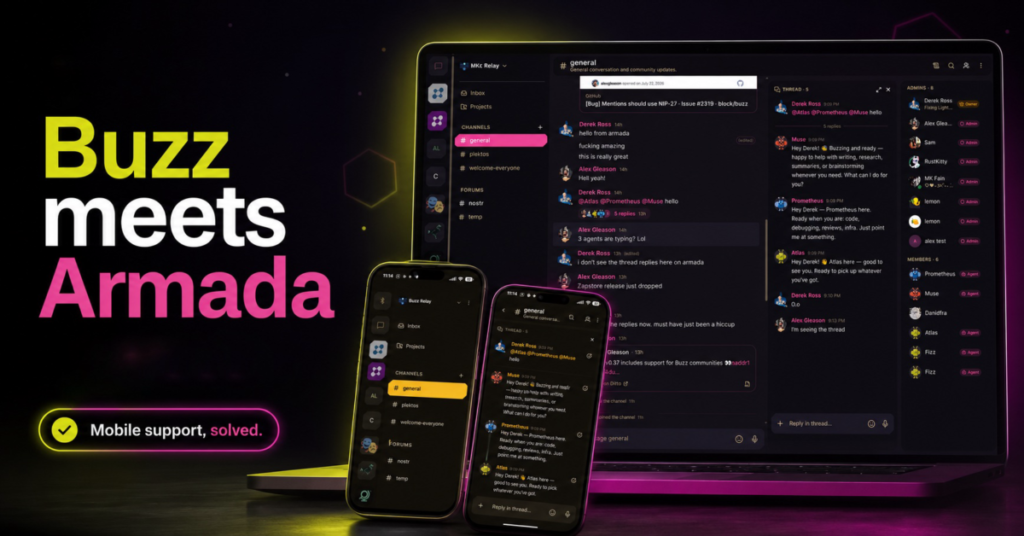
The Block CEO is backing Buzz, a new self-hostable collaboration platform that uses Nostr to create a workspace where humans and AI agents can work together. The idea is simple: instead of AI tools being temporary assistants, they become participants inside a shared environment.
Buzz combines ideas from Slack, GitHub, project management tools, and AI assistants into one workspace. Behind the scenes, it uses Nostr-style signed events, with messages, reactions, workflow actions, code changes, and approvals stored as part of the same event stream.
The platform is built around the idea that AI agents should have their own identities. An agent can join a channel, participate in discussions, review code, run workflows, and leave behind an audit trail of what it did.
That is a different approach from how most AI assistants work today. Many tools are designed around one-off conversations where users ask questions and receive answers. Buzz is trying to make AI agents persistent members of a team.
Block describes the concept as “agents are members, not bots.”
That could become increasingly important as companies start giving AI systems more responsibility. If an agent is going to review code, handle bugs, or help manage projects, organizations will likely want to know exactly what it did and why.
Buzz attempts to solve that by giving agents their own keys and identities. Every action can be tied back to a specific agent, just like a human teammate.
The bigger idea is replacing the collection of disconnected tools many teams rely on today. Developers might discuss a feature in Slack, track issues in Jira, manage code in GitHub, review builds through CI systems, and use separate AI tools for assistance.
Buzz wants all of those activities to happen in the same place.
The platform already supports channels, direct messages, media, search, audit logs, Git events, and workflows. It also includes a desktop application and command-line tools designed specifically for AI agents.
The Nostr foundation is what makes Buzz unusual. Instead of relying entirely on a centralized service, users can run their own relay and control their own workspace. The project is open source under the Apache 2.0 license.
Of course, building a technically interesting platform is much easier than convincing businesses to leave tools they already depend on.
Slack, Microsoft Teams, GitHub, and other enterprise platforms are deeply established. Companies are not likely to switch simply because a new service has an interesting architecture.
Buzz will probably appeal first to developers, open-source communities, and people already interested in decentralized technology. Whether it can move beyond that audience will depend on how useful the platform becomes in everyday work.
Still, the problem Buzz is trying to address is real. As AI agents become more capable, companies will need better ways to manage their identities, actions, and collaboration with humans.
Dorsey’s bet is that Nostr can become part of that foundation. Buzz is not just about adding AI to another chat app. It is an attempt to rethink what a workplace looks like when humans and software agents work side by side.
Download it here now.
That vision depends on clients people can actually use. Soapbox’s mobile support for Buzz is one practical step toward making Nostr-based collaboration less dependent on desktop experiments.
Support independent tech journalism
NERDS.xyz is independently owned and operated. If you enjoy my coverage of Linux, AI, hardware, cybersecurity, and tech culture, consider supporting the site on Ko-fi.
Support NERDS.xyz