
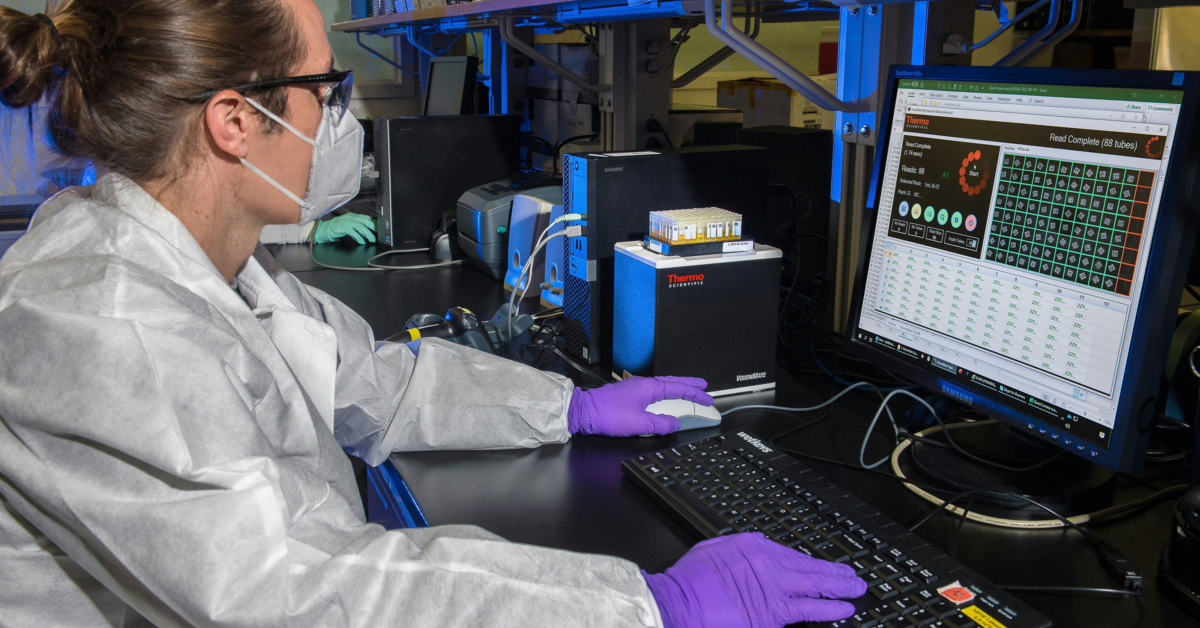
We have artificial intelligence capable of analyzing enormous amounts of data. Scientists can sequence the genome of a pathogen and compare it with other samples. Governments can track disease patterns across entire populations, while modern laboratories can identify microorganisms with incredible precision.
And yet, when something potentially frightening happens, the world can still run into an embarrassingly old-fashioned problem: somebody isn’t sharing enough information. That’s becoming part of the story surrounding the mysterious death of a laboratory worker at the Irkutsk Anti-Plague Research Institute in Siberia.
The 28-year-old worker, identified by media reports as Darya Shipilova, died on October 2 after becoming seriously ill. Russian authorities have described her illness as pneumonia of unknown origin and say there is no evidence connecting her death to dangerous pathogens handled at the institute. Reports that she may have contracted pneumonic plague have not been confirmed, according to Reuters.
That is important because “plague” is the sort of word capable of causing panic all by itself. Nearly 200 people who had contact with Shipilova have reportedly been placed under medical observation, while quarantine measures were introduced at the institute and nearby hospitals, according to The Guardian. So far, there is no evidence of a wider outbreak.
The World Health Organization currently considers the public health risk low in Russia and very low internationally. Russia has also told the WHO that no plague cases have been confirmed in Irkutsk, as PBS NewsHour reports. In other words, this is not a reason to start preparing for the Black Death 2.0, but it is a fascinating demonstration of the limits of technology.
U.S. officials want Russia to provide more information about what happened. Secretary of State Marco Rubio has publicly called for greater transparency, while American health and national security agencies have been monitoring the situation, according to Reuters.
Think about how strange that is in 2026. We are living through an AI boom in which companies routinely talk about machines discovering drugs, predicting disease, analyzing medical images, and solving scientific problems that would take humans far longer. At the same time, genomic sequencing and bioinformatics give researchers tools that previous generations of epidemiologists could only dream about.
Modern outbreak detection goes far beyond doctors reporting sick patients. Wastewater surveillance can provide an early warning that certain pathogens are circulating through a community, sometimes before enough people arrive at hospitals to make the pattern obvious. Rapid PCR testing can help identify suspected infections quickly, giving public health officials another tool for figuring out what they are dealing with.
Portable DNA sequencers can bring genomic analysis closer to an outbreak instead of requiring every sample to travel to a large centralized laboratory. Scientists can sequence a pathogen, compare its genetic fingerprint with other samples, and look for relationships that could help reconstruct how an infection is spreading.
Metagenomic sequencing takes the idea even further. Instead of starting with the assumption that a patient has plague, influenza, COVID-19, or some other specific disease, researchers can analyze genetic material in a sample and search for whatever organisms are actually present. That can be particularly useful when someone becomes seriously ill and nobody knows what caused it.
Digital contact tracing adds another layer. When appropriate data is available, investigators can use digital records and other information to reconstruct possible chains of transmission much faster than relying entirely on interviews and handwritten notes. Combine that with electronic health records, pathogen databases, animal surveillance, and environmental sensors, and researchers have an enormous amount of information potentially available to them.
Even satellites can play a role. Environmental conditions can affect where disease-carrying animals and insects live, while satellite observations can help researchers monitor changes in vegetation, temperature, water, and other factors associated with certain disease risks. It is another example of technology giving scientists a view of potential outbreaks that would have sounded like science fiction not that long ago.
AI can sit on top of many of these systems and search for patterns across enormous datasets. A computer can potentially connect changes in hospital admissions, laboratory results, wastewater measurements, genomic sequences, animal infections, and environmental conditions far faster than a person could examine all of that information manually.
Technology can also help prevent an outbreak from happening in the first place. High-containment laboratories increasingly use automation, robotics, remote monitoring, and specialized safety systems to reduce direct human interaction with dangerous biological material. The goal is simple: the less unnecessary handling of a dangerous pathogen by a person, the fewer opportunities there are for something to go wrong.
Put all of this together and humanity has an impressive technological arsenal for identifying biological threats. We can test samples rapidly, sequence genetic material, monitor wastewater, analyze environmental conditions, trace contacts, compare pathogens against massive databases, and ask AI to search through the resulting mountain of information.
But AI cannot analyze data it doesn’t have, and a supercomputer cannot sequence a sample it cannot access. The world’s most advanced disease-surveillance platform cannot magically determine what happened inside a laboratory thousands of miles away if the people controlling the information don’t provide enough of it.
That may be the bigger technology lesson from what is happening in Russia. The next pandemic may not catch humanity completely technologically unprepared. If anything, our ability to detect and analyze biological threats is becoming more sophisticated, and AI will almost certainly become an increasingly important part of that system. But the information still has to move.
Countries have to report unusual events. Laboratories have to provide accurate findings. Health organizations need access to trustworthy data, and governments need to communicate with one another even when their political relationships are terrible. Otherwise, some of the most advanced technology ever created becomes little more than a very expensive guessing machine.
There is another problem too. Information vacuums don’t stay empty for long anymore. When official details are limited, social media fills the gap almost instantly. Speculation becomes screenshots, screenshots become viral posts, and AI tools can now generate convincing images, videos, articles, and supposed “evidence” faster than health authorities can investigate an actual pathogen.
I’ll admit that I’m personally monitoring this situation anxiously. The word “plague” gets my attention, particularly when a death involves someone working at an anti-plague research institute and there are still unanswered questions. I’m not panicking yet, though, and the available evidence doesn’t give me a reason to do so.
For now, there is no confirmed plague outbreak in Irkutsk, and the WHO’s assessment that the international risk is very low should offer some reassurance. I’ll be watching closely for additional information, particularly anything that provides a clearer explanation of what happened to Shipilova.
This strange episode should also make the technology industry pay attention. We keep building smarter systems for detecting threats, analyzing diseases, and predicting what could happen next. That’s great, but those systems still depend on one technology humanity has never managed to perfect: people telling each other the truth.
Support independent tech journalism
NERDS.xyz is independently owned and operated. If you enjoy my coverage of Linux, AI, hardware, cybersecurity, and tech culture, consider supporting the site on Ko-fi.
Support NERDS.xyz