
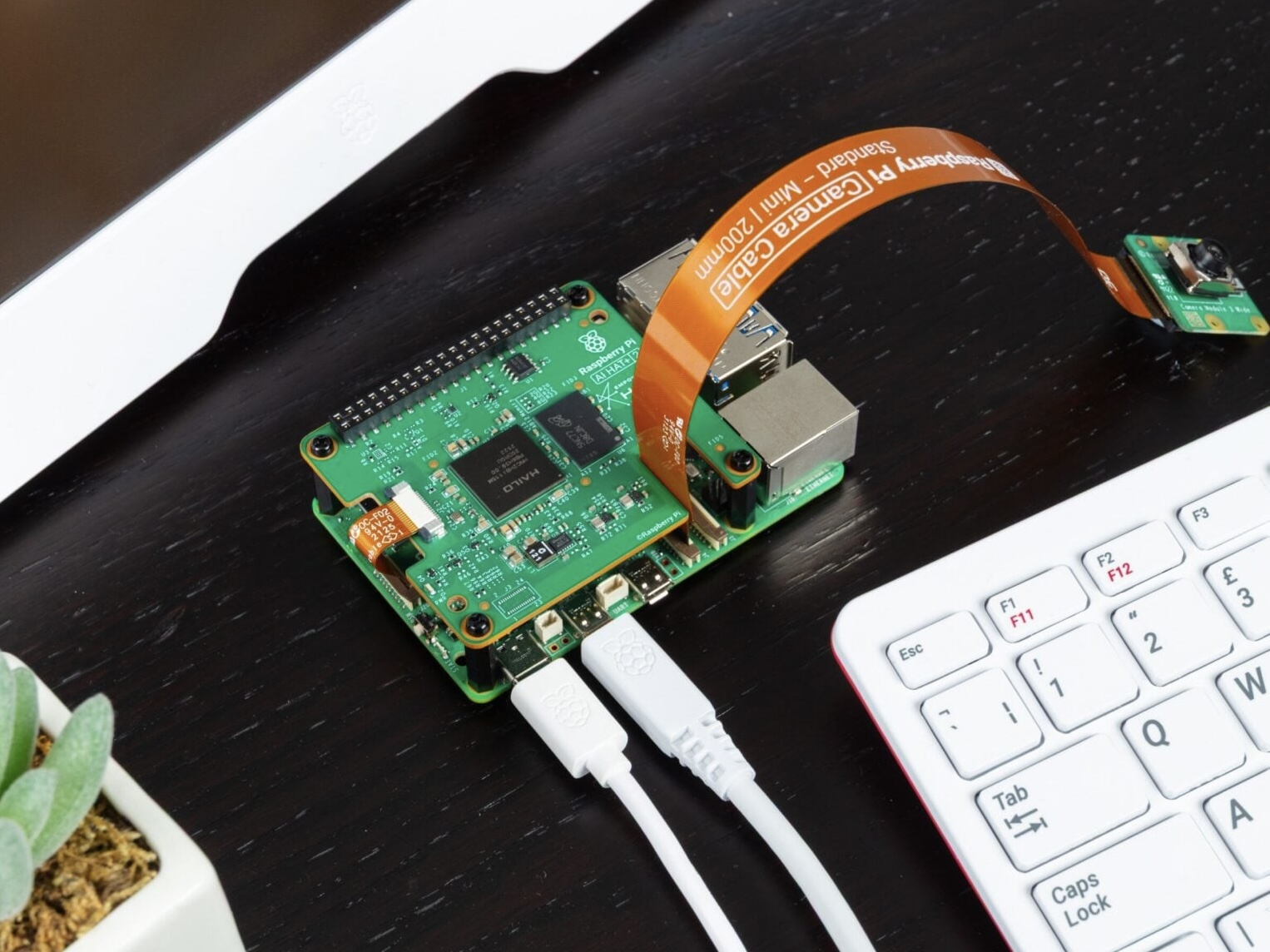
Raspberry Pi kicked off last year with the AI HAT+, a clever add-on board that let Raspberry Pi 5 fans dabble in object detection and other vision tasks without touching the cloud. It was a neat trick. Privacy on device. Tight camera integration. No monthly bills. The thing is users quickly hit a ceiling. You could detect faces or label what was in front of a webcam but you could not ask the Pi to write code or translate French. Generative AI was the missing piece and everyone knew it.
That hole has now been plugged by the new Raspberry Pi AI HAT+ 2. This board is designed for one thing bringing real generative AI models to the Pi without leaning on outside servers. Instead of the Hailo-8 that powered the original board this new model carries Hailo’s 10H accelerator offering up to 40 TOPS of INT4 performance. Raspberry Pi is basically calling its own bluff. All the privacy and edge benefits users wanted only truly arrive once text models run too.
Performance alone would not solve it. The big shift here is the move to 8GB of dedicated memory on the HAT itself which finally gives tiny models room to breathe. The first AI HAT had to squeeze workloads into the Pi’s system RAM which was fine for recognizing a cat but hopeless once you wanted to generate even a small paragraph of output. The added RAM plus the new architecture means the HAT+ 2 can handle compact large language models vision-language hybrids and even lightly tuned variants meant for translation or coding.
Raspberry Pi keeps stressing that these are still small models by today’s standards. The supported list at launch includes Qwen2.5, Llama 3.2, Qwen2 Instruct and DeepSeek distills that live in the 1 to 1.5 billion parameter range. That means users will not get ChatGPT sized knowledge or answers that mimic Claude’s massive training corpus. What they will get is speed privacy and reliability because nothing leaves the Raspberry Pi box. Anyone running a Pi 5 can basically create their own homegrown assistant server. And for a lot of hobby projects that is more than enough.
The real magic arrives when you move beyond stock models. Raspberry Pi users already retrain object detectors using images matched to their specific hardware layouts and warehouse angles. The same idea now applies to text. The AI HAT+ 2 supports LoRA style training which means that a modest model can be altered to become an expert in customer service lines product support internal documentation or even a child’s bedtime story universe. That is the secret that makes edge AI useful once you decide to operate in a tight domain a tiny model suddenly feels brilliant.
Compatibility is another selling point. Raspberry Pi says anyone running software from the earlier board should slide into the AI HAT+ 2 without rewiring code. The familiar libcamera and rpicam tools remain in place for all the usual recognition jobs and Raspberry Pi claims vision model performance is roughly level with the 26 TOPS board because the accelerator has more memory to work with. The company clearly realized nobody wanted to pick between cameras and text. Now you can run both in the same box.
This release also lands at a fascinating moment. Cloud AI keeps getting heavier and more expensive while users keep asking for portable and private versions of the same experiences. A $130 Raspberry Pi board running its own local model might actually matter more in classrooms nursing homes farms and maker spaces than a giant GPT in a distant data center. And unlike the cloud there is no subscription creeping behind you.
The Raspberry Pi AI HAT+ 2 is available today for $130 through Raspberry Pi’s approved resellers, and of course it runs with Linux on Raspberry Pi 5. For edge AI tinkerers this might be the add-on of 2026.
Support independent tech journalism
NERDS.xyz is independently owned and operated. If you enjoy my coverage of Linux, AI, hardware, cybersecurity, and tech culture, consider supporting the site on Ko-fi.
Support NERDS.xyz